Llamas vs Alpacas vs Vicuñas in Cusco: Key Differences Every Traveler Should Know
Discover the differences between llamas, alpacas and vicuñas in Cusco. Learn about their wool, size and cultural importance through authentic Andean experiences.
• Difference between llama and alpaca
• Alpaca wool Peru
• Llamas in Cusco
• Andean animals Sacred Valley
• Sustainable tourism Cusco
• Authentic Andean experiences
⸻
Discover the Icons of the Andes During Your Trip to Cusco
When visiting Cusco and the Sacred Valley, many travelers confuse llamas and alpacas. At first glance they may look similar — but they are very different animals in size, wool quality, behavior and economic importance.
Understanding these differences makes your Andean experience more meaningful and helps you appreciate local culture on a deeper level.
⸻
🦙 Llamas: Strong, Tall and Historic
Llamas are the largest of the domesticated Andean camelids and were essential during Inca times as pack animals.
Key Characteristics of Llamas:
• Long, elongated neck
• Tall body structure
• Banana-shaped, pointed ears
• Tail stands upright
• Coarser, lower-quality wool
Unlike alpacas, llamas do not produce high-quality fiber. Their wool is thicker and rougher, traditionally used for ropes, blankets or basic textiles — not luxury garments.
Today in Cusco, llamas are often seen near archaeological sites and rural communities, and they remain symbols of strength and Andean resilience.
⸻
🦙 Alpacas: Smaller, Softer and Economically Vital
Alpacas are smaller and much more compact than llamas.
Key Characteristics of Alpacas:
• Shorter neck
• Smaller body size
• Straight, spear-shaped ears (shorter than llamas)
• Tail does not stand upright like a llama’s
• High-quality, soft and valuable fiber
This is the biggest difference: alpacas produce premium wool, while llamas do not.
Alpaca fiber is:
• Softer than sheep wool
• Warmer and lightweight
• Hypoallergenic
• Highly demanded in international fashion markets
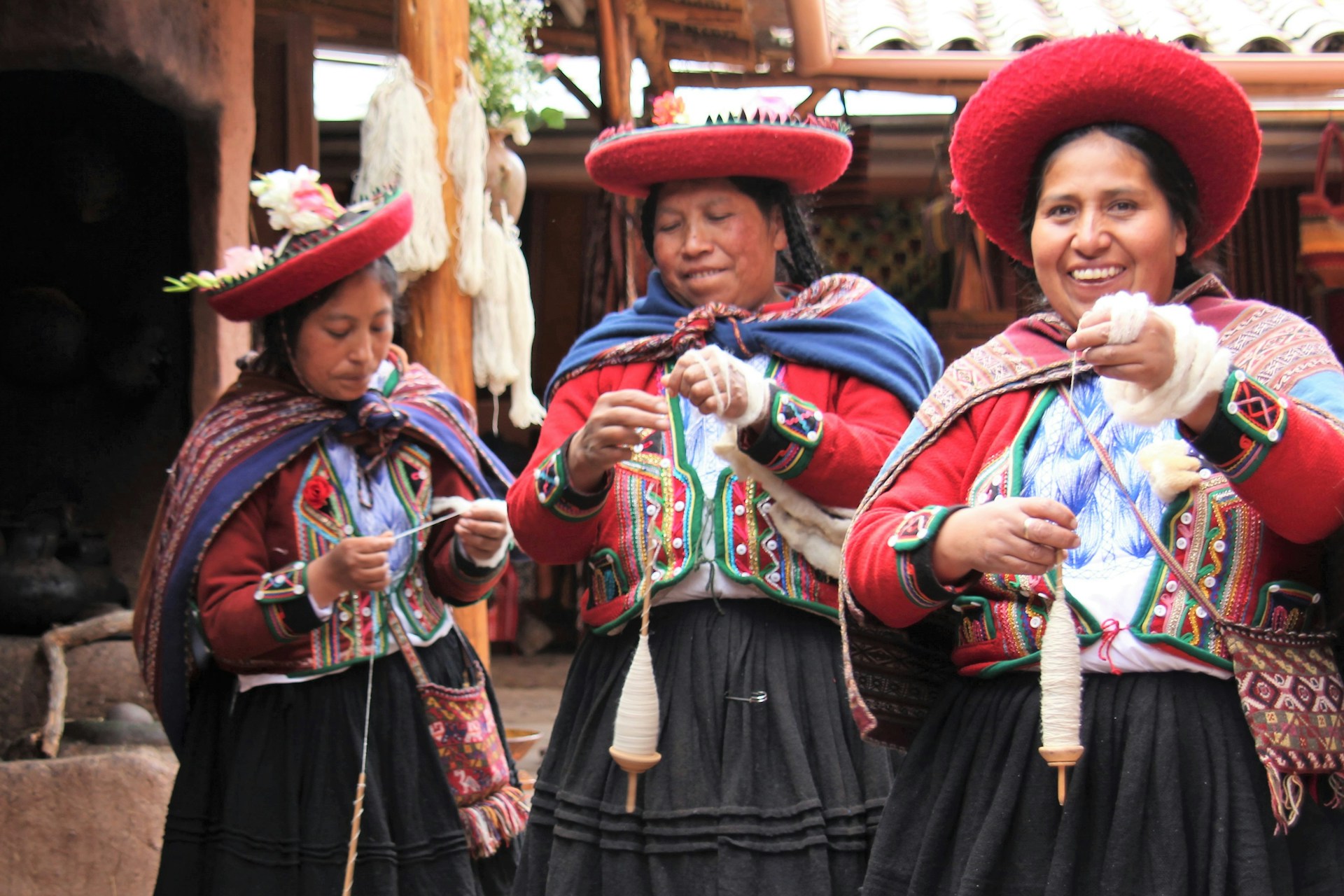
Peru is the world leader in alpaca fiber production, and many Andean women depend on alpaca textiles as their main source of income.
When travelers visit alpaca farms in Cusco, they directly support sustainable tourism and local female artisans.
⸻
🦌 Vicuñas: Wild and Luxurious
Vicuñas are the smallest and most delicate of the three. They are wild and protected by law.
Their fiber is considered the finest natural fiber in the world — even softer than alpaca. However, they are not domesticated and can only be shorn during traditional community ceremonies called “chaccu.”
Seeing vicuñas in the wild near Cusco is a rare and special experience.
⸻
Quick Comparison for Travelers
Feature Llama Alpaca Vicuña
Neck Long & elongated Shorter Slim
Ears Long, banana-shaped Short & straight Small
Tail Upright Not upright Down
Wool Quality Coarse / low quality Soft & premium Finest in the world
Main Role Transport & tourism Luxury fiber & textiles Wildlife & luxury fiber
⸻
Why This Matters for Your Cusco Experience
When you visit Cusco, understanding these differences allows you to:
✔ Choose authentic alpaca textile experiences
✔ Support sustainable Andean communities
✔ Appreciate traditional knowledge
✔ Connect with local culture beyond sightseeing
Tourism in the Andes is not just about landscapes — it is about people, animals and traditions that have survived for centuries.
Experience the Real Andes
Whether you are visiting an alpaca farm in the Sacred Valley, taking photos with llamas near ancient ruins, or spotting wild vicuñas in high-altitude landscapes, these animals represent the living heritage of Peru.
Travel deeper.
Learn the differences.
Support local communities.
Experience Cusco authentically.
⸻
t