
Key takeaways
- The Sacred Valley hosts Andean condors, dozens of hummingbird species, waterbirds and wild camelids, all within reach of Chinchero.
- Early morning and the dry season from May to September give you the clearest skies and the most reliable wildlife sightings.
- Vicunas and guanacos are wild and protected, while alpacas and llamas are the domesticated camelids you meet on valley hikes.
- The giant hummingbird, the largest hummingbird on Earth, lives in these high Andean habitats and can be spotted feeding at flowering shrubs.
- Responsible viewing means keeping your distance, skipping flash photography and letting a quiet dome base do the work of bringing wildlife close.
Sacred Valley wildlife is remarkably easy to find once you know where to look: condors ride the thermals above the ridges, hummingbirds work the flowering shrubs at dawn, and herds of camelids graze the high grassland terraces. The valley around Chinchero sits in one of the most bird-rich countries on Earth, which makes a single stay here feel like a rolling nature walk.
This guide covers the iconic species to watch for, the best places to spot them near Chinchero, the four Andean camelids you will meet, the seasons that reward patient watchers, and how to observe it all without disturbing the animals. By the end you will know what you are looking at and when to be outside with your binoculars.
Iconic Andean species: condors, hummingbirds and more
The Andean condor is the headline act. With one of the broadest wingspans of any land bird, it ranks among the largest flying birds in the world, and its slow, soaring flight over the ridgelines is unmistakable. Condors breed slowly and are now classed as Vulnerable on the global conservation scale, so a sighting is a privilege rather than a given. You can read the peer-reviewed conservation background on the Andean condor in this PLOS ONE study hosted by PubMed Central.
At the opposite end of the size scale, the Andean highlands are hummingbird country. Peru is home to dozens of hummingbird species, and the standout here is the giant hummingbird, the largest hummingbird on Earth. According to Guinness World Records, it measures around 23 cm long and weighs 18 to 24 grams, which makes it nearly twice the mass of the next largest hummingbird. Watch for it hovering at flowering agaves and tobacco-tree blossoms on warm mornings.
Beyond these two, the valley rewards a careful eye with other Andean birds around Cusco:
- Andean geese grazing beside lagoons and wet meadows
- Puna ibis probing the shallows for insects
- Mountain caracaras patrolling the fields for scraps
- Black-chested buzzard-eagles circling the slopes
- Sparkling violetear and giant conebill among the smaller songbirds
Where to spot Sacred Valley wildlife around Chinchero
Chinchero sits high on the plateau, which gives you long sightlines and a mix of habitats within a short drive. A few reliable zones stand out.
Ridgelines and open grassland above Chinchero. Early and late in the day, thermals build along the slopes and raptors use them to gain height. Scan the skyline for condors and buzzard-eagles rather than searching the ground.
Wetlands and lagoons. Huaypo lagoon, a short trip from Chinchero, draws Andean geese, ducks, coots and ibis. Still water at dawn is the single most productive habitat for waterbirds in the valley.
Terraces and agricultural edges. The concentric terraces at Moray and the field margins throughout the valley attract seed-eaters, hummingbirds and the small raptors that hunt them. The microclimates the Incas engineered here still shape where flowers and insects appear.
Gardens and flowering shrubs near your base. Hummingbirds are creatures of habit. Find a flowering bush in the morning and you can watch the same birds return to it again and again.
Alpacas, llamas and vicunas: the camelids of the Andes
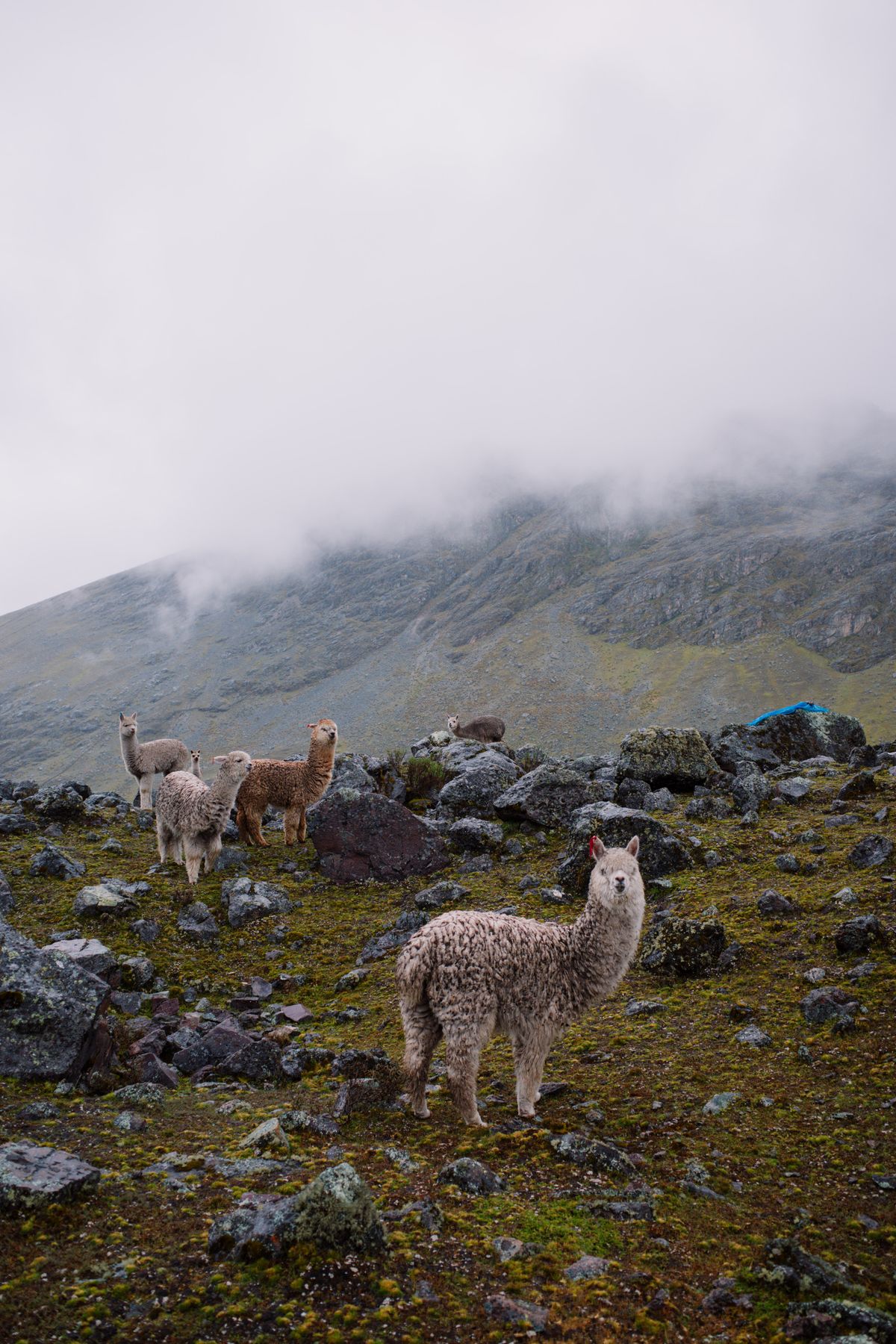
Four camelids share these mountains, and telling them apart is half the fun. Two are domesticated and two are wild.
- Llama. The largest and most familiar, long used as a pack animal. Look for the tall, banana-shaped ears and a coarse coat.
- Alpaca. Smaller and woollier than the llama, bred for its soft fleece. The alpaca is the camelid you are most likely to meet on a valley hike. If you want to walk with a herd, see our guide on how to experience an alpaca hike near Chinchero.
- Vicuna. The smallest and most elegant, a wild and protected species with famously fine wool. Vicuna numbers in Peru recovered dramatically after near-extinction decades ago, one of South America's clearest conservation success stories.
- Guanaco. The wild ancestor of the llama, slimmer and rangier, seen on remote high grassland rather than farmed land.
The simple rule: if the animal is near a village, being herded or wearing colored ear tassels, it is a llama or alpaca. If it is wary, slender and keeping its distance on open puna, it is likely a vicuna or guanaco.
Best times and seasons for wildlife watching
Two rhythms matter here, the daily one and the seasonal one.
Time of day. Birds are most active in the first two or three hours after sunrise, when the air is cool and insects and nectar are on the move. Raptors and condors come later, once the sun has warmed the slopes and built the thermals they ride. A productive wildlife day often starts before breakfast and finishes with a mid-morning condor watch.
Season. The dry season, roughly May to September, brings clear skies, firm trails and strong visibility, which is why it is the most popular window for both wildlife and stargazing. The green, wetter months from November to March fill the wetlands, bring flowering plants and lift hummingbird activity, at the cost of afternoon cloud and rain. Build your trip around whichever rhythm suits the species you most want to see.
Whichever season you choose, build in flexibility. Wildlife does not keep a schedule, and the quiet mornings you leave open are often the ones that deliver.
Observing nature responsibly from your dome base
Good wildlife watching leaves no trace on the animal. Keep your distance, especially from grazing camelids and nesting birds, and let the animal decide how close the encounter gets. Skip flash photography, which stresses birds and ruins the moment for everyone nearby. Stay on established trails so you do not trample the fragile high-altitude plants that feed the whole food chain.
A quiet base does a lot of the work for you. At Sky Dome Peru, the glass dome suites sit in open country near Chinchero, so you can watch the sky at dawn, catch hummingbirds at nearby flowering shrubs and scan the ridgelines for raptors without driving anywhere. The same clear, low-light conditions that make the valley good for wildlife also make it excellent after dark, so a day of birding pairs naturally with a night under the stars.
Start your first morning early. Step outside with binoculars before the valley wakes, give the flowering shrubs near your dome ten quiet minutes, and let the first condor of the day find its thermal while you watch.
Frequently asked questions
What wildlife can you see in the Sacred Valley?
You can see Andean condors, many hummingbird species, Andean geese and other waterbirds, plus wild and domesticated camelids such as vicunas, guanacos, alpacas and llamas.
Where is the best place to spot Andean birds near Cusco?
Open grasslands and ridgelines above Chinchero, wetlands like Huaypo lagoon and the terraces at Moray are reliable spots for condors, waterbirds and hummingbirds.
When is the best time for wildlife watching in the Sacred Valley?
The dry season from May to September offers clear skies and strong visibility, and early mornings are best for bird activity across the whole year.
What is the difference between alpacas, llamas, vicunas and guanacos?
Alpacas and llamas are domesticated camelids raised by Andean communities, while vicunas and guanacos are wild, protected species that roam the high grasslands.