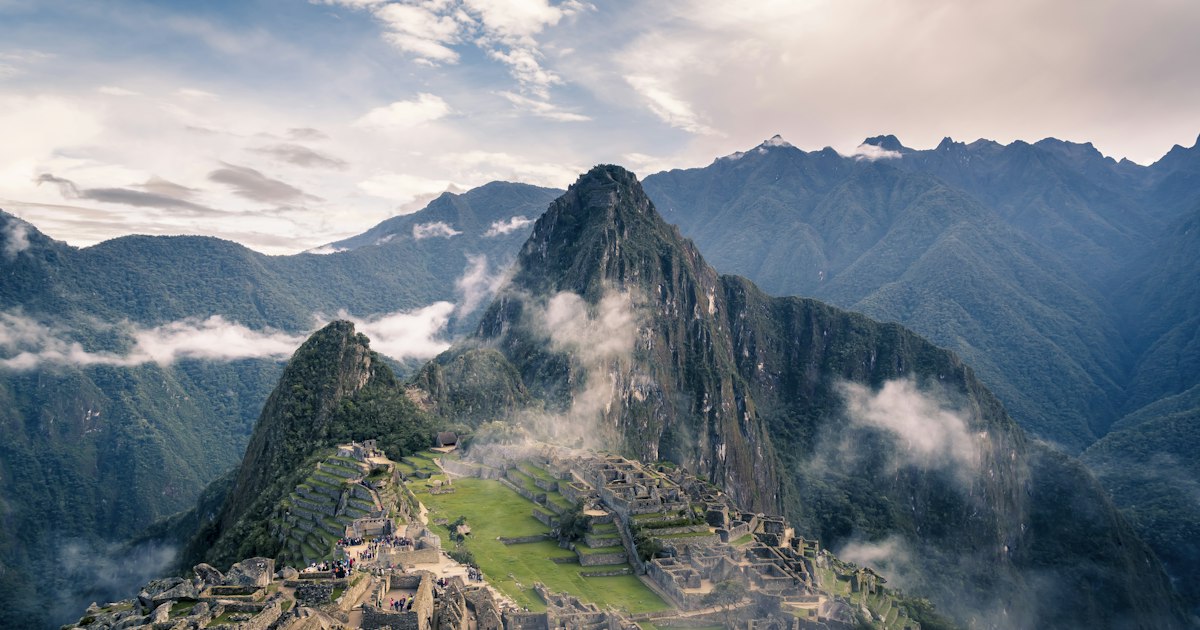
How to Get from Cusco to the Sacred Valley

Key takeaways

  • The two main driving routes run via Chinchero (northwest) and via Pisac (northeast), each serving different sights.
  • Ollantaytambo sits about 72 km by road from Cusco, roughly a two hour drive.
  • Chinchero is higher than Cusco, so plan a day or two to acclimatize before arriving.
  • Private transfers offer door to door convenience, while shared colectivos are the budget option that leave when full.

The trip from Cusco to the Sacred Valley takes anywhere from under an hour to about two hours by road, depending on which town you are heading for and which of the two main routes you take. Most travelers drive northwest through Chinchero or northeast through Pisac, with the choice coming down to which Incan sites you want to see along the way.

The valley floor sits lower and warmer than Cusco city, which makes it a popular base for anyone acclimatizing to the altitude before or after Machu Picchu. Below is a plain breakdown of the routes, the transport options, and what to expect on the way to each major stop.

Routes and transport options from Cusco to the Sacred Valley

Cusco sits high in the Andes, while the valley floor around Urubamba drops several hundred meters lower. That descent is the whole point for many visitors: the lower air is easier to sleep in and the daytime climate is milder.

You have three practical ways to make the journey:

  • Private transfer or hired driver. Door to door, flexible, and the easiest option if you are carrying luggage or want to stop for photos.
  • Organized day tour. A guided van that covers several sites in one loop, convenient but fixed to a group schedule.
  • Shared colectivo. Local minibuses that run from set departure streets in Cusco to the main valley towns. They are inexpensive and leave when full rather than on a fixed timetable.

Which you pick depends on budget, how much freedom you want, and whether you plan to visit multiple sites in a day.

Driving via Chinchero vs the Pisac road

The two classic routes out of Cusco split almost immediately, and they feel like different journeys.

The Chinchero route (northwest)

The high road climbs out of Cusco and crosses a windswept plateau through the town of Chinchero before descending into the valley near Urubamba. This is usually the quicker way to reach Urubamba and Ollantaytambo, and it puts you within a short detour of the Maras salt pans and the Moray terraces. Note that Chinchero actually sits higher than Cusco, so the air up top is thin before the road drops down.

The Pisac route (northeast)

The other road winds northeast and brings you into the valley at Pisac, home to a hillside fortress and a well known market. From there the valley road follows the Urubamba River downstream toward Ollantaytambo. This route takes a little longer but rewards you with a gradual, scenic descent along the river.

A good strategy is to drive one way in and the other way out, turning the trip into a loop that takes in both ends of the valley.

Travel times to Maras, Moray and Ollantaytambo

Here is roughly how long each leg takes from Cusco by car on the Chinchero route:

  • Chinchero: about 30 to 40 minutes. The first major stop and the gateway to the high plateau.
  • Maras and Moray: around 1 hour to 1 hour 15 minutes, reached by a short turnoff from the main valley road.
  • Urubamba: roughly 1 hour to 1 hour 15 minutes, the valley's commercial hub.
  • Ollantaytambo: about 2 hours. The town lies some 72 km by road northwest of Cusco, according to Wikipedia, and sits at 2,792 m.

Ollantaytambo is where many travelers catch the train to Machu Picchu, so it is worth knowing that end of the valley is the farthest from the city. If your itinerary runs that way, the fortress town itself is worth a half day of exploring, as covered in our guide to Ollantaytambo, the fortress town of the Sacred Valley.

Private transfers vs shared colectivos

For most international travelers the real decision is comfort versus cost.

Private transfers give you a driver, a fixed pickup at your hotel, and the freedom to stop wherever you like. They suit groups, families, and anyone arriving with luggage or on a tight schedule. Many Sacred Valley lodges can arrange the pickup for you so a driver is waiting when you land in Cusco.

Shared colectivos are the budget choice. They depart from specific streets in Cusco, cost only a few soles per person, and run throughout the day. The tradeoffs are that they leave only once full, they stop to pick up and drop off along the way, and there is limited room for large bags. They are a fine option for confident, lightly packed travelers heading to a single town.

If you are weighing where to stay and how much of the trip to simplify, our comparison of glass dome glamping versus traditional hotels in Cusco covers how your base affects the logistics of getting around.
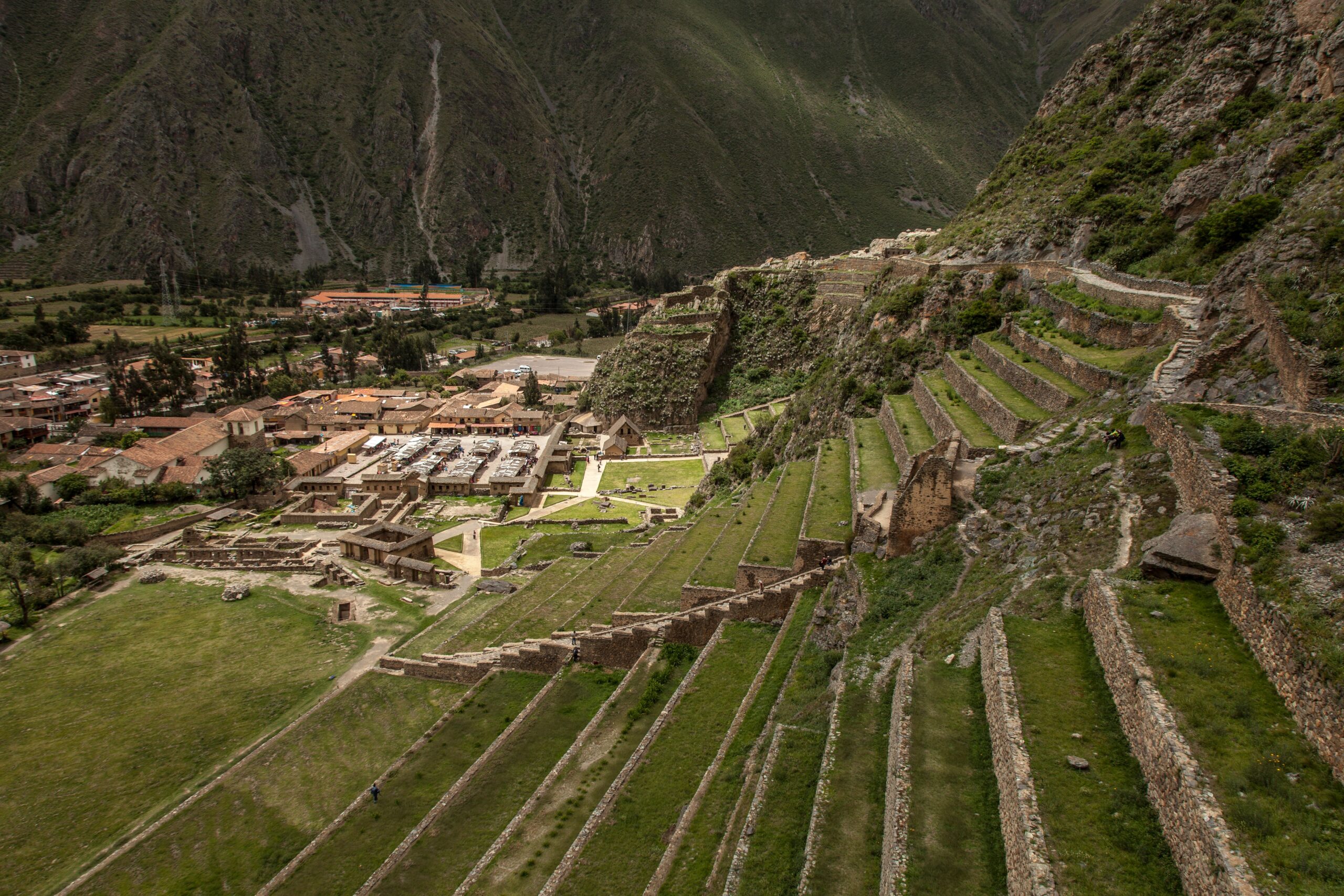
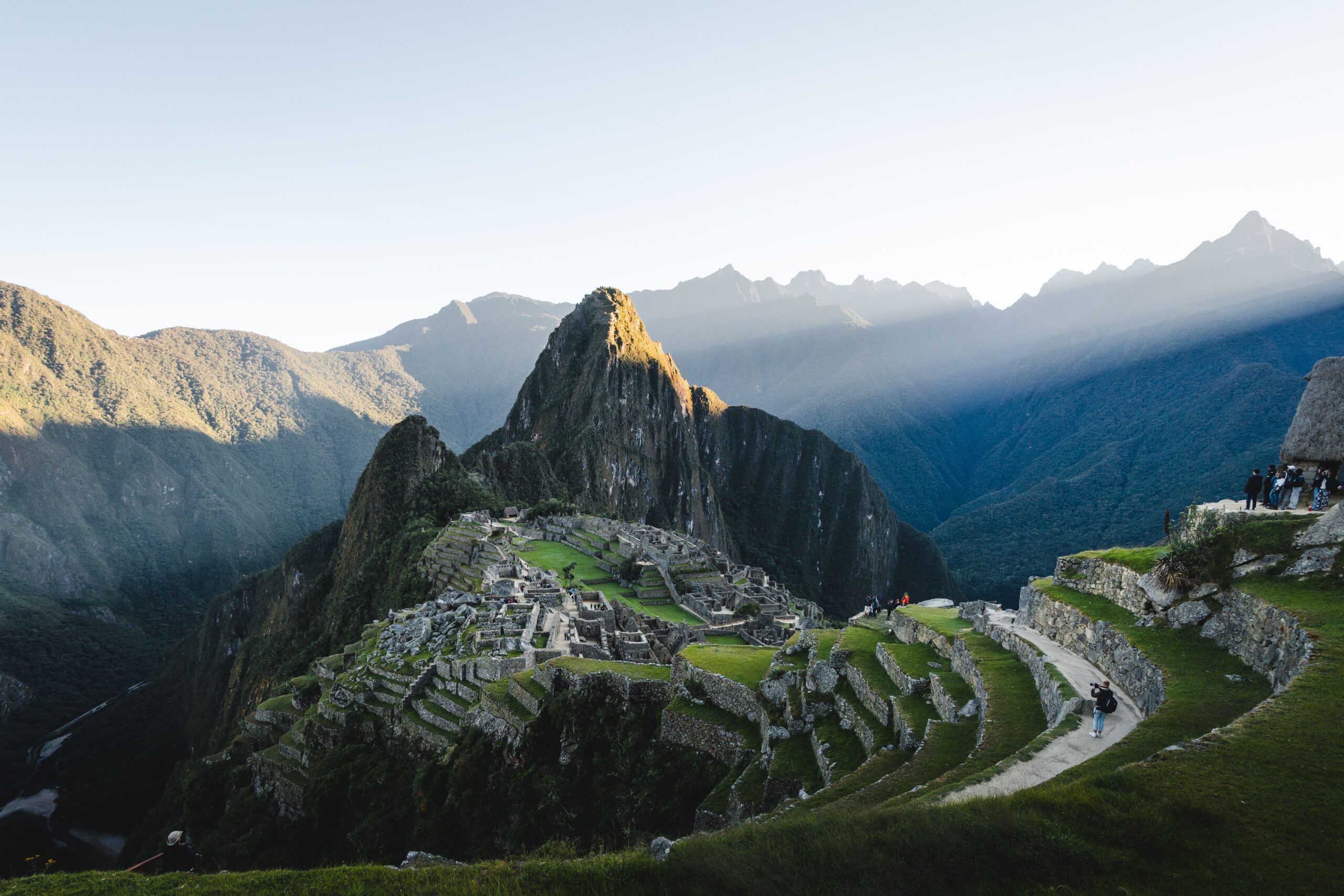
Aerial view of ancient Incan terraces in Peru's Sacred Valley

Arriving at Sky Dome Peru near Chinchero

Sky Dome Peru sits on the high plateau near Chinchero, right on the Chinchero route out of Cusco, which makes it one of the first Sacred Valley stays you reach and an easy transfer from the airport. Because the setting is above the valley floor, you get wide open Andean skies that make the glass dome suites ideal for stargazing, and you are only a short drive from Maras, Moray, and the weaving town of Chinchero itself.

Plan your arrival with the altitude in mind. Since the plateau is higher than Cusco, take it easy on your first day, drink plenty of water, and let your body adjust before heading out on any hikes. Arranging a transfer in advance means a driver meets you and handles the drive while you simply watch the mountains roll past.

Ready to turn the journey into the start of the experience? Book a transfer with your stay, pick the Chinchero route for the smoothest arrival, and give yourself a buffer day on the plateau to acclimatize before you explore the valley below.
Green landscape of Peru's Sacred Valley framed by Andean mountains

Frequently asked questions

How long does it take to get from Cusco to the Sacred Valley?

Reaching the first valley towns takes under an hour, while Ollantaytambo at the far end is about a two hour drive from Cusco by road.

What is the best route from Cusco to the Sacred Valley?

The Chinchero route is faster and gives easy access to Maras and Moray, while the Pisac route is more scenic and passes the Pisac ruins and market.

How do I reach Chinchero from Cusco?

Chinchero sits on the high road northwest of Cusco, about 30 to 40 minutes away by car or shared colectivo, and it is the first major stop toward the valley.

Can I use shared transport instead of a private transfer?

Yes. Shared colectivos run from fixed points in Cusco to valley towns and cost only a few soles, though they leave when full and make stops along the way.
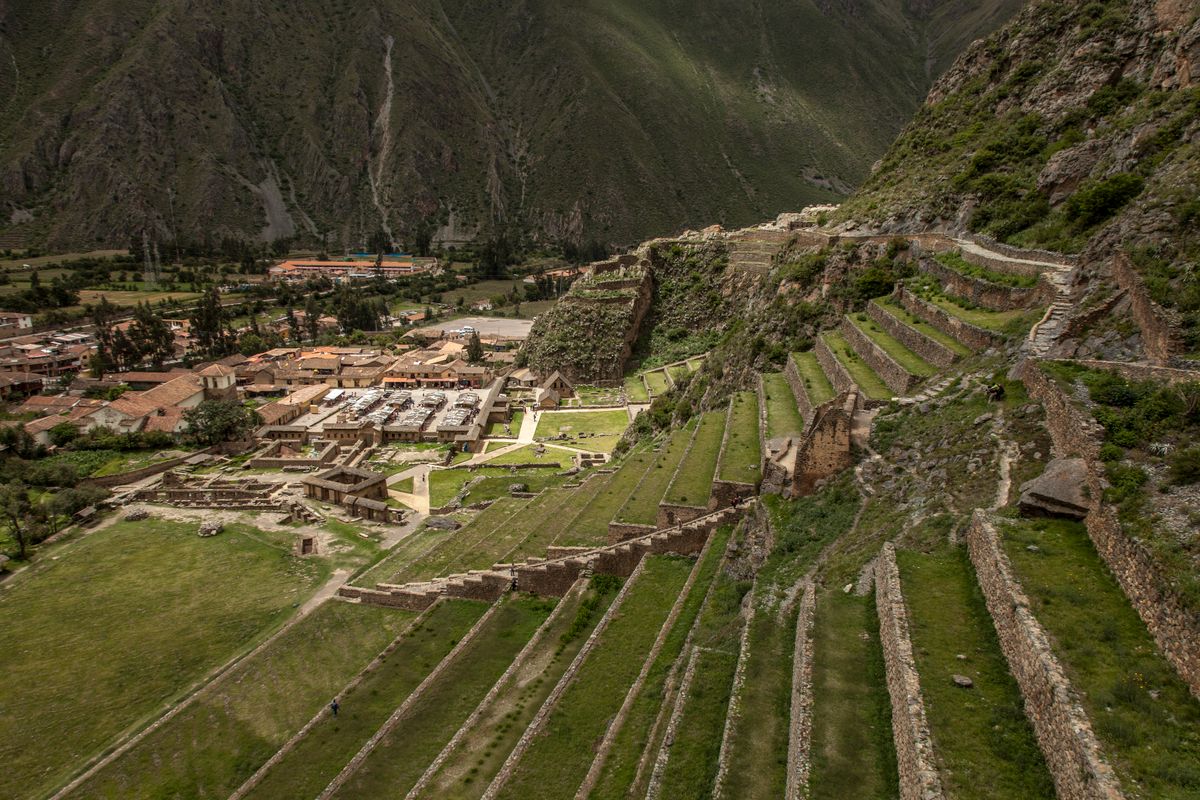
Ollantaytambo: Fortress Town of the Sacred Valley

Key takeaways

  • The Ollantaytambo ruins are a combined military, religious, administrative, and agricultural complex, confirmed by Peru's official tourism authority COSITUC.
  • Ollantaytambo sits about 94 km from Cusco city and is widely regarded as the only Inca town still lived in on its original street grid.
  • Most Machu Picchu rail services depart from Ollantaytambo station, making the town the valley's main launch point for the trek or train.
  • Give the site half a day: climb the terraces to the Temple of the Sun, then explore the lower town's original Inca lanes.

The Ollantaytambo ruins are an Inca complex that served military, religious, administrative, and agricultural purposes all at once, according to Peru's official tourism authority (COSITUC). You climb a wall of stone terraces to reach an unfinished Temple of the Sun, then walk out into a town where families still live on the original Inca street grid.

That mix of standing ruin and living settlement is why Ollantaytambo rewards a slower visit than most Sacred Valley stops. Below is a practical guide to the terraces, the temple, the town, the train to Machu Picchu, and how to fit it all around your base in the valley.

What Are the Ollantaytambo Ruins?

Peru's government tourism body, COSITUC, describes Ollantaytambo as a monumental work of Inca architecture that worked as a military, religious, administrative, and agricultural complex at the same time. Rather than one building, the site is a whole hillside engineered into terraces, stairways, fountains, and a temple platform.

The terraces are the first thing you see. Broad agricultural steps climb the slope in a steep green staircase, and a narrower set of ceremonial terraces leads the eye toward the summit. Walking up them is the main physical effort of the visit, and the reason to carry water and take your time at altitude.

At the top sits the Temple of the Sun. Its most famous feature is a wall of massive pink granite blocks fitted together so tightly that the joints barely take a fingernail. COSITUC notes the main temple is partially destroyed, yet the front stone wall of perfectly assembled pieces still stands and remains the clearest display of Inca masonry on the whole hill.

Construction here was never finished. The Spanish conquest interrupted the work, and some blocks still lie where they were abandoned on the approach, which gives the site an unusual half-built honesty you rarely get at polished monuments.

Why Is Ollantaytambo a Living Inca Town?

Ollantaytambo is widely regarded as the only Inca settlement still inhabited on its original urban grid. The lower town below the ruins keeps the layout the Incas laid out, and many houses rest on stone foundations the Inca builders set in place.

Walk away from the ticket gate and into the old quarter. The lanes are narrow and cobbled, water runs in open stone channels down the middle of some streets, and the lower courses of many walls are original Inca stonework with newer adobe stacked on top. People hang laundry, run small shops, and carry groceries past masonry that is roughly five centuries old.

This is what sets the town apart from a ruin you only look at. The grid is not reconstructed for visitors; it is a working neighborhood that happens to be built on Inca bones. Spending an hour here, rather than rushing straight back to a bus, is the difference between seeing a monument and understanding a place.

How Does the Train to Machu Picchu Work from Here?

Ollantaytambo is the main rail gateway to Machu Picchu from the Sacred Valley. Most trains to Aguas Calientes, the small town directly below the citadel, depart from Ollantaytambo station rather than from Cusco, so the town functions as the practical launch point for the final leg.

The station sits in the lower town, an easy walk or short taxi ride from the ruins and most lodging. The ride down the Urubamba gorge to Aguas Calientes is short, scenic, and one of the few ways to reach Machu Picchu without multi-day trekking. Because of this, many travelers deliberately sleep in Ollantaytambo the night before an early Machu Picchu entry.

Book rail tickets well ahead in the high season, and give yourself a buffer at the station, which gets busy at peak departure times. Spending the night in town also means you can see the ruins in the quieter late afternoon, after the day groups have left for Cusco.

What Are the Best Viewpoints and Walking Route?

The strongest views come from the terraces themselves and from the hill opposite. The climb up the main terraces gives you a widening look back over the red-roofed town and the valley, and the Temple of the Sun platform is the classic high vantage point over the whole site.

Most visitors can cover the highlights on this simple half-day route:

  1. Enter at the main gate and climb the agricultural terraces steadily, pausing on the landings to catch your breath and photograph the town below.
  2. Reach the Temple of the Sun, study the six-block granite wall, and look across the valley to the storehouses on the far slope.
  3. Descend by the ceremonial terraces and the fountain area, including the carved ceremonial bath often called the Princess Baths.
  4. Cross into the lower town and walk the original Inca grid, following the water channels through the oldest lanes.
  5. Finish at a cafe on the main square, or walk to the station if you are boarding the train.

For a different angle, look toward the Pinkuylluna hill across from the main ruins, where old Inca storehouses cling to the cliff. The granaries were placed high to catch cold wind that helped preserve grain, and the walk up gives you a free panorama of the fortress terraces from the side. Wear real shoes; the paths are steep and uneven.

How Do You Pair Ollantaytambo With Your Sacred Valley Stay?

Ollantaytambo fits naturally into a wider Sacred Valley itinerary rather than a single day trip from Cusco. The town sits deep in the valley, well beyond the city, so it pairs best with nearby sites and a valley base rather than a long out-and-back drive.

A common and comfortable plan is to stay in the Sacred Valley near Chinchero, then build outward. From a valley base you can reach Ollantaytambo, the circular terraces of Moray, and the salt pans of Maras in loops of an hour or two, instead of climbing back up to Cusco between each stop. That also helps with altitude, since the valley floor sits lower than the city.

If you want your lodging to double as part of the experience, the glass dome glamping suites at Sky Dome Peru put you in the valley within reach of Ollantaytambo and set you up for clear Andean night skies after a day on the terraces. Timing matters too, so it is worth checking the best time to visit the Sacred Valley before you lock in dates, since the dry and wet seasons change both the crowds and the views.

Start by booking a valley bed for the night before your Machu Picchu train, since lodging near the station fills fast in high season. Seeing Ollantaytambo late in the day, sleeping in the valley, and catching an early train turns a crowded photo stop into the fortress town it actually is.

Frequently asked questions

What are the Ollantaytambo ruins?

They form a single Inca complex with military, religious, administrative, and agricultural roles, according to Peru's tourism authority COSITUC. The hillside terraces lead up to an unfinished Temple of the Sun.

How far is Ollantaytambo from Cusco?

Peru's official COSITUC listing places the site about 94 km from the city of Cusco. By road the drive through the Sacred Valley typically takes a little over an hour and a half.

Do the Ollantaytambo ruins connect to Machu Picchu?

Yes. Most trains to Aguas Calientes, the town below Machu Picchu, leave from Ollantaytambo station, so many travelers spend a night in town before boarding.

Do I need a ticket to enter the ruins?

Yes. The archaeological park is part of the Boleto Turistico del Cusco administered by COSITUC, which bundles several Sacred Valley sites on one pass.

How long should I spend in Ollantaytambo?

Plan on roughly half a day. The terrace climb and Temple of the Sun take one to two hours, with more time for the old town lanes and viewpoints.

Glass Dome Glamping vs Traditional Hotels in Cusco

Key takeaways

  • A glass dome puts the Sacred Valley sky inside your room; a city hotel keeps the view outside a window.
  • Choose a Cusco hotel for late-night nightlife and walkable restaurants, and a Sacred Valley dome for quiet, nature and stars.
  • Dark-sky travel is a real draw: 62% of travelers say they are interested in dark-sky destinations (Booking.com 2025 predictions).
  • Glamping pricing bundles the setting, the stargazing and the Andean experiences, so compare total value rather than nightly rate alone.

If you are deciding between glamping and a hotel in Cusco, the honest answer is that they solve different trips. A glass dome in the Sacred Valley gives you quiet, open space and a sky you can watch from bed, while a traditional city hotel gives you walkable streets, late dinners and a central base for day tours.

This guide compares glass dome glamping vs a hotel in Cusco across the five things that actually change your stay: comfort and privacy, the view, location and access, who each option suits, and what you really pay for. By the end you should know which one fits the trip you are planning.

How do comfort, privacy and amenities compare?

On paper the two are closer than most travelers expect. A well-built glass dome is a solid, insulated suite with a real bed, a private bathroom, heating for cold Andean nights and room to spread out. A good Cusco hotel offers the same core comforts plus the convenience of a front desk, daily housekeeping and an on-site restaurant.

The clearest split is privacy. A glass dome usually stands on its own patch of ground, so you rarely share a wall, a corridor or a breakfast room with other guests. A city hotel concentrates many rooms in one building, which is efficient and social but means more foot traffic and noise.

Glass dome accommodation also tends to lean toward a single, generous room rather than a layout with separate spaces. If you value a lobby, a gym, a spa and a bar steps from your door, a hotel wins on sheer volume of amenities. If you value waking up with nobody around and nothing between you and the valley, the dome wins.

Why is a 360-degree view the real advantage?

The view is where a glass dome stops competing with hotels and starts playing a different game. A transparent dome turns the Sacred Valley sky into part of the room, so the landscape and the stars are overhead rather than framed in a window. That is something a standard hotel room, however luxurious, cannot reproduce.

Interest in exactly this kind of experience is climbing. In 2026, dark-sky travel is a mainstream motivation: 62% of travelers say they are interested in dark-sky destinations, according to Booking.com's 2025 travel predictions (The Hustle, 2025). The same reporting puts the dark sky tourism market at roughly $10 billion and projected to double by 2035.

There is a reason the night sky itself has become a selling point. Light pollution is rising fast, with night sky brightness increasing by about 9.6% a year between 2011 and 2022, according to the same reporting. Places with genuinely dark skies are getting rarer, which raises the value of a stay built around them.

The Sacred Valley's high altitude and distance from big-city glare make it a strong setting for this. From a glass dome near Chinchero you can lie back and watch the sky change without leaving your bed, and many guests pair the stay with a guided night session. For the practical side of that, our stargazing in the Sacred Valley guide covers timing, altitude and what you can realistically see.

Location and access: valley domes vs city hotels

Location is the trade-off that decides most bookings. A Cusco city hotel puts you inside the historic center, within a short walk of restaurants, markets, nightlife and the airport transfer. Glass dome glamping sits out in the Sacred Valley near Chinchero, usually 45 to 60 minutes from the city, surrounded by farmland, mountains and quiet.

That distance earns its keep once you look at what sits around the domes. The Sacred Valley is the launch point for some of the region's best day trips, and basing yourself there cuts the daily back-and-forth to Cusco.

From a valley base you are close to the archaeological sites and villages that draw people to the region in the first place: the weaving town of Chinchero, the circular terraces of Moray and the salt pans of Maras. If your trip is built around those experiences rather than city evenings, waking up among them saves time and road hours.

The honest downside is spontaneity. In the city you can walk out for a late meal or change plans on a whim. In the valley you plan around transfers and daylight. Travelers who want both sometimes split the trip: a couple of nights in a dome for the landscape, then a night in Cusco before flying out.

The Sacred Valley of the Peruvian Andes with terraced mountains and open sky

Which option suits couples, families and solo travelers?

There is no single winner here, because each traveler type weights comfort, privacy and location differently. The quick version: couples and stargazers lean dome, nightlife-focused and very short trips lean city hotel, and families and solo travelers can go either way depending on pace.

Couples get the most out of glass dome accommodation. The privacy, the shared view and the quiet make it a natural fit for a romantic or milestone trip, and the setting does a lot of the work that a hotel would try to buy with amenities.

Families do well in a dome when they want space and the outdoors. Children tend to love the novelty of sleeping under the stars and having grounds to roam, and a self-contained suite keeps everyone together. Families on tight connection times, or with very young children who need a crib and a pharmacy nearby, sometimes find a central hotel simpler.

Solo travelers split on priorities. If you are here to hike, photograph the landscape and watch the sky, the valley rewards you. If meeting other travelers and easy evening logistics matter more, a Cusco hotel or hostel keeps you in the middle of things. A guided alpaca hike near Chinchero is one of the easiest ways to turn a quiet valley base into an active solo day.

Cost and value: what you really pay for with glamping

Comparing a dome rate to a hotel rate line by line usually misleads, because the two prices cover different things. A city hotel rate buys a room and standard services. A glass dome rate buys the setting, the privacy, the 360-degree views and, at properties like Sky Dome Peru, access to the Andean experiences that make the valley worth the trip.

Demand helps explain the pricing. Travelers are actively seeking the kind of nature-and-sky stay a dome delivers, and dark-sky experiences sit inside a market worth roughly $10 billion that is projected to double by 2035. You are paying for something that is becoming harder to find, not just a night's sleep.

The smarter way to judge value is total trip cost and what the stay replaces. A dome in the valley can fold accommodation, scenery, stargazing and tours into one base, which trims transfers and the cost of chasing experiences from a city hotel. If your priority is a central location and a cheap bed between tours, a hotel can still be the better math.

Glamping vs hotel in Cusco: a simple way to decide

Match the stay to the trip, not the other way around. If this trip is about Cusco's streets, restaurants and nightlife on a short schedule, book a central city hotel. If it is about the Sacred Valley, the landscape, privacy and a sky you can watch from bed, a glass dome is built for exactly that.

If the valley version is the trip you want, look at a Sacred Valley glass dome glamping suite and plan your nights around the experiences you most want to wake up next to.

Frequently asked questions

Is glamping cheaper than a hotel in Cusco?

Not always, and the comparison is rarely like-for-like. A glass dome rate usually bundles a private setting, 360-degree views and access to guided Andean experiences, so you are paying for an experience rather than a bed in the city.

Where are the glass domes located compared to Cusco hotels?

Most glass dome glamping sits in the Sacred Valley near Chinchero, roughly 45 to 60 minutes from Cusco city. City hotels put you inside the historic center, within walking distance of restaurants, nightlife and the airport transfer.

Is a glass dome a good choice for families?

Yes, for families who want space, nature and novelty. A dome with its own grounds suits children who like the outdoors. Families with very young kids or tight transfer schedules sometimes prefer a central Cusco hotel.

Can you actually see the stars from a glass dome?

The whole point of a transparent dome is the sky overhead. The Sacred Valley's high altitude and limited light pollution make it strong for stargazing, which is why many guests pair a dome stay with a dedicated night-sky session.

Chinchero: Living Capital of Andean Weaving

Key takeaways

  • Chinchero sits at 3,762 meters in Cusco's Sacred Valley and is tied to the Quechua word for rainbow, a nod to the brilliant color in its textiles.
  • Weavers use handmade backstrap looms and natural dyes, including cochineal insects for reds and purples and local plants for greens and yellows.
  • Visiting a weaving cooperative lets you watch the full process and buy directly from the artisans who made each piece.
  • The colonial church, completed in 1607, stands on Inca foundations linked to the ruler Tupac Yupanqui.
  • A base in the Sacred Valley puts Chinchero, Moray, and Maras within easy reach of a single trip.

Chinchero weaving is the living thread that connects this small Andean town to centuries of Inca craft. Weavers here still spin, dye, and loom by hand, using techniques passed down through families long before Peru was a nation. Sitting at 3,762 meters on a high plain above Cusco's Sacred Valley, Chinchero has kept its textile traditions alive while much of the region modernized around it. For travelers who want to understand Andean culture rather than just photograph it, a morning spent with Chinchero's weavers is one of the richest experiences in the valley.

This guide covers why the town is tied to the rainbow, how backstrap looms and natural dyes actually work, how to visit a cooperative responsibly, and how to fold a Chinchero visit into a wider Sacred Valley trip.

Why Chinchero Is Called the Birthplace of the Rainbow

Ask a local why Chinchero glows with color and you will hear about rainbows. The town's name is linked to the Quechua word K'uychi, meaning rainbow, and at this altitude on the open plain, sudden rain and bright sun produce them often. Those arcs of color became a kind of reference library for the weavers, who match the tones they see in the sky and the surrounding hills to the dyes they draw from plants and insects.

The connection runs deeper than a nickname. Chinchero textiles are famous for saturated reds, deep purples, and greens that hold their brightness for years. The US nonprofit Andean Textile Arts, which supports local weavers, describes how the community reads color from its landscape and reproduces it in cloth, turning the surrounding environment into a palette. That relationship between place and pattern is why many people call Chinchero the home of the rainbow.

How Chinchero Weaving Works: Backstrap Looms and Natural Dyes

The heart of Chinchero weaving is the backstrap loom, a tool so simple it folds into a bundle you can carry. One end ties to a post or a tree, and the other wraps around the weaver's lower back. By leaning forward and back, the weaver controls the tension of the warp threads herself, which means the loom and the body work as one machine. There is no frame, no motor, and no fixed size beyond the reach of the weaver's arms.

Before any weaving begins, the wool has to become color. Fiber from sheep, alpaca, or llama is washed, spun by hand on a drop spindle, and then dyed in batches over open fires.

The dyes come entirely from nature:

  • Cochineal, a tiny insect that lives on cactus, is crushed to produce reds and purples. Adding lime juice or other natural modifiers shifts the shade across a wide range of tones.
  • Ch'illca, a local plant, yields green.
  • Qolle, another regional plant, produces yellow.

Weavers combine and overdye these to build the full spectrum you see in a finished piece. A single intricate textile can take weeks of daily work, which is why a genuine handwoven piece costs far more than the machine-made versions sold in city markets. Learning to spot the difference, the slight irregularities of handspun thread and the depth of plant-based color, is part of what makes a Chinchero visit worthwhile.

Visiting a Weaving Cooperative and Supporting Local Artisans

The best way to see Chinchero weaving is at a cooperative, where a group of weavers demonstrates the entire process from raw fleece to finished cloth. A typical visit walks you through washing the wool with a natural root soap, spinning, dyeing over the fire, and finally weaving on the backstrap loom. You can watch cochineal turn a pot of water blood red in seconds, which tends to be the moment visitors remember most.

The most respected institution in the region is the Centro de Textiles Tradicionales del Cusco, founded as a nonprofit in 1996 by Chinchero native Nilda Callañaupa Alvarez. The organization now works with 12 villages outside Cusco to keep traditional techniques alive and ensure weavers are paid fairly, according to a profile published by The Explorers Club. Buying at a cooperative means your money reaches the artisan who made the piece rather than a middleman, and it helps fund the training that keeps young weavers in the craft.

A few practical tips for a respectful visit:

  • Ask before photographing weavers up close, and consider a small purchase in return.
  • Expect fixed, fair prices at cooperatives; aggressive haggling undercuts the people doing the work.
  • Carry small bills, since card payment is rare in the villages.

Chinchero's Colonial Church and Inca Foundations

Chinchero's history did not begin with weaving alone. The town was an important Inca settlement, and above the modern plaza you can still see terraced agricultural platforms and finely cut stone walls from that era. These were part of a royal estate, and local tradition links the site to the Inca ruler Tupac Yupanqui.

On top of those Inca foundations stands the colonial church, completed in 1607. Spanish builders raised it directly over an Inca palace structure, a pattern repeated across Peru as one civilization was literally built on another. Inside, the walls and ceiling are covered in painted religious scenes, and the contrast between the Andean stonework at the base and the Catholic decoration above tells the story of the region in a single building. The church anchors the Sunday market, when weavers and farmers from surrounding communities fill the square.

How to Blend Culture With a Stay at Sky Dome Peru

Chinchero rewards travelers who slow down, and that is easier when you are not racing back to a Cusco hotel each evening. Basing yourself in the Sacred Valley puts the town's weavers, the church, and the Sunday market within a short drive, with time left over for the other sites that cluster nearby.

Staying at Sky Dome Peru, with its glass dome glamping suites near Chinchero, makes it simple to pair textile culture with the rest of the valley. A single trip can combine a weaving cooperative with the circular terraces of Moray, the salt pans of Maras, and an alpaca hike, then end with clear high-altitude stargazing from your suite. That mix of hands-on culture and comfortable nature stay is what draws travelers to this corner of Cusco.

If you only do one cultural activity in the Sacred Valley, make it a Chinchero weaving demonstration, and book it for a Sunday so you can catch the market and the church in the same morning. Plan the rest of the day around Moray and Maras, and you will leave with a far deeper sense of how the Andes actually live.

Frequently asked questions

What is Chinchero known for?

Chinchero is known for traditional Andean weaving, its Sunday market, and a colonial church built on Inca foundations. It sits on the high plain above Cusco's Sacred Valley.

How high is Chinchero?

Chinchero sits at about 3,762 meters (12,343 feet) above sea level, higher than Cusco. Give yourself time to acclimatize before visiting.

What dyes do Chinchero weavers use?

Weavers use natural dyes made from cochineal insects for reds and purples, and from local plants such as ch'illca for green and qolle for yellow.

Can you buy textiles directly from weavers in Chinchero?

Yes. Weaving cooperatives give demonstrations and sell finished pieces, so your payment goes to the artisans and their communities rather than to resellers.

Moray Terraces: The Incas’ Agricultural Laboratory

Key takeaways

  • The Moray terraces are concentric circular platforms the Incas used to test crops across different growing conditions.
  • The temperature gap between the top and bottom rings reaches up to 15 degrees Celsius, which let the Incas copy climates found across their empire.
  • Moray sits about 50 km from Cusco and pairs naturally with the Maras salt mines on a single day trip.
  • Arrive early for soft light, cooler air, and clear photos of the full circular bowl from the rim.

The Moray terraces are a set of concentric circular platforms the Incas carved into the Andean highlands near Cusco to test how crops grow under different conditions. Each ring sits at a slightly different depth, which produces its own small climate, and that design let Inca farmers study plants before spreading them across the empire. If you are planning a trip to the Sacred Valley, Moray is one of the strangest and most rewarding stops you can add.

This guide covers what the terraces were built for, how the temperature trick worked, how to walk the site, and how to reach Moray from Chinchero and the nearby town of Maras.

What the Circular Terraces of Moray Were Built For

Stand at the rim of the largest bowl at Moray and you see a series of rings descending into the earth like a green amphitheater. The biggest depression drops about 30 meters (98 feet) from the top terrace to the floor and measures roughly 220 meters (722 feet) across, according to Interesting Engineering. The whole site sits on a high plateau around 3,500 meters (11,500 feet) above sea level.

The leading explanation is that Moray worked as an open-air agricultural research station. Soil studies of the different levels suggest the Incas brought in earth from various regions and matched it to specific terraces. Builders in the 15th century shaped each ring with care, adding drainage and retaining walls so the platforms held water and warmth differently from top to bottom. The result was a controlled space where farmers could watch how a seed behaved before committing it to fields that fed thousands of people.

Moray reflects a wider Inca talent for reading land and water. The same engineering instinct shows up across the region, from irrigation channels to the evaporation pools you can read about in our guide to the Maras salt mines.

How Temperature Microclimates Helped the Incas Adapt Crops

The heart of Moray is the temperature difference between its levels. Researchers have measured a gap of as much as 15 degrees Celsius (27 degrees Fahrenheit) between the topmost ring and the lowest, as reported by Interesting Engineering. That spread is large enough to act like a staircase of climates stacked inside a single site.

Here is why that mattered. The Inca Empire stretched from warm coastal valleys to cold, high mountain passes. Crops that thrived near sea level often failed in the highlands, and the reverse was true as well. At Moray, the sunken bottom terraces stayed warmer and more sheltered, mimicking lower, milder zones, while the exposed upper rings stayed cooler, closer to the conditions of the high Andes.

By planting the same crop at different depths, farmers could watch which conditions suited it best and gradually coax a plant to tolerate a wider range. This is one reason the Andes became home to thousands of varieties of potato and maize. The terraces gave the Incas a way to acclimate seeds step by step, moving a crop from one microclimate to the next until it could survive where they needed it.

The microclimate idea also explains the circular shape. A round bowl captures and holds sunlight through the day, and the curved walls shield plants from wind, so each ring behaves as a distinct growing environment rather than a single flat field.

Walking the Moray Terraces: Layout, Viewpoints and Photo Spots

Moray is compact and easy to explore, which makes it a relaxed stop compared with larger ruins. The site holds several circular complexes, and the largest is the one most visitors photograph.

A few tips for the walk:

  • Start at the main rim. The first viewpoint above the largest bowl gives the classic shot of all the rings at once. This is the best spot to understand the scale before you go lower.
  • Follow the perimeter path. A gravel trail loops around the top edge, offering the terraces from several angles and framing the snow-capped peaks behind them on clear days.
  • Look for the smaller bowls. Short side paths lead to the lesser-known complexes nearby, which are quieter and good for close-up detail shots of the stonework.
  • Mind the altitude. At 3,500 meters the air is thin, so climbing back up from lower vantage points takes more effort than it looks. Go slowly and carry water.

For photography, early morning light rakes across the rings and brings out their depth, and the crowds are thinner before the midday tour buses arrive. If you want the terraces lit evenly, late afternoon works too, though the angle flattens the shadows that give the bowl its drama.

Getting to Moray from Chinchero and Nearby Maras

Moray sits roughly 50 km from Cusco, a drive of about an hour and a half depending on traffic and road conditions. Most travelers reach it as part of a loop through the high plain above the Sacred Valley.

From Chinchero, Moray is a short continuation of the same route that leaves Cusco. Chinchero makes a natural first stop for its market and colonial church, and from there the road carries on toward the Maras and Moray turnoff. If you are staying in the area, pairing these sites turns a single morning into a full highland experience, and you can round out the day with the region's crafts, markets, and alpaca herds.

From the town of Maras, the famous salt mines sit only a few kilometers away, which is why almost every itinerary ties Moray and Maras together. A common plan is to visit Moray first, then descend to the salt pans before returning. Entry to Moray is typically covered by the regional tourist ticket, the boleto turístico, while the salt mines charge a separate cash fee, so carry some soles for the day.

Getting there is straightforward by three main methods:

  1. Guided tour. The easiest option, with transport and a guide who explains the agricultural theory on site.
  2. Private taxi or driver. Flexible timing and ideal if you want to beat the buses or linger for photos.
  3. Colectivo plus walk. Budget travelers can take a shared van toward Maras and walk or grab a short transfer to the ruins, though this takes more planning.

Why Moray Belongs on Your Sacred Valley Itinerary

Moray rewards the kind of traveler who wants more than a postcard. It is a rare chance to stand inside a working piece of ancient science and see how a civilization solved a problem we still wrestle with today: how to grow the right food in a difficult climate. The site is quick to visit, visually unlike anything else in the region, and it slots neatly between Chinchero, Maras, and the rest of the valley.

It also fits a wider trip. The Sacred Valley rewards travelers who slow down and build days around a few strong sites rather than racing through everything, and timing your visit well makes a real difference, as we explain in our guide to the best time to visit the Sacred Valley. A glass dome suite at Sky Dome Peru near Chinchero puts you within easy reach of Moray and Maras, so you can explore the terraces in the cool morning light and return to the valley for the night.

To make the most of Moray, plan it as the first stop on a Maras loop, leave Chinchero early, and give yourself time to walk the rim slowly. Go when the light is low and the air is quiet, and the Incas' agricultural laboratory will feel less like a ruin and more like a workshop that was simply set down a few centuries ago.

Frequently asked questions

What were the Moray terraces used for?

Most researchers describe Moray as an agricultural testing ground. Each ring held its own microclimate, so the Incas could study how crops behaved under different temperatures and conditions before planting them widely.

How far is Moray from Cusco?

Moray lies roughly 50 km from Cusco. By car or tour van the trip takes about an hour and a half, usually combined with a stop at the nearby Maras salt mines.

How deep are the Moray terraces?

The main depression drops about 30 meters from the rim to the lowest terrace and spans around 220 meters across, which creates the striking bowl shape seen in photos.

Is Moray worth visiting in the Sacred Valley?

Yes. It is one of the most unusual Inca sites, quick to walk, and easy to combine with Maras, Chinchero, and a base in the Sacred Valley.

Maras Salt Mines: A Visitor’s Guide

Key takeaways

  • The Maras salt pans hold roughly 4,500 salt wells fed by a natural spring, and sit at about 3,200 metres in Peru's Sacred Valley (UNESCO World Heritage Centre).
  • Local families still harvest pink salt by hand using the same evaporation method used since pre-Incan times.
  • Visit in the dry season, from May to September, and arrive mid-morning when sunlight brightens the white terraces for photos.
  • Maras pairs naturally with the Moray agricultural terraces, and both fit into one relaxed day trip from Chinchero.

The Maras salt mines are a vast cascade of shallow white ponds carved into a hillside in Peru's Sacred Valley, where local families still harvest pink salt by hand. You reach them on a short drive from Chinchero or Cusco, and the best time to arrive is a dry-season morning when sunlight lifts the colors off the terraces. This guide covers the history, how to get there, when to go, and how to pair the salineras de Maras with the nearby Moray ruins.

The salt pans sit at roughly 3,200 metres above sea level, so the air is thin and the sun is strong. A short visit rewards you with one of the most distinctive landscapes in the Andes: thousands of geometric pools stepping down the slope, each one a slightly different shade of white, cream, and rust.

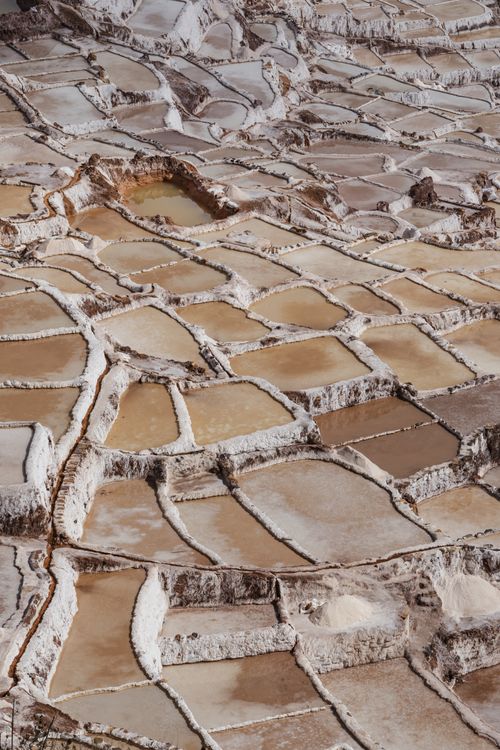
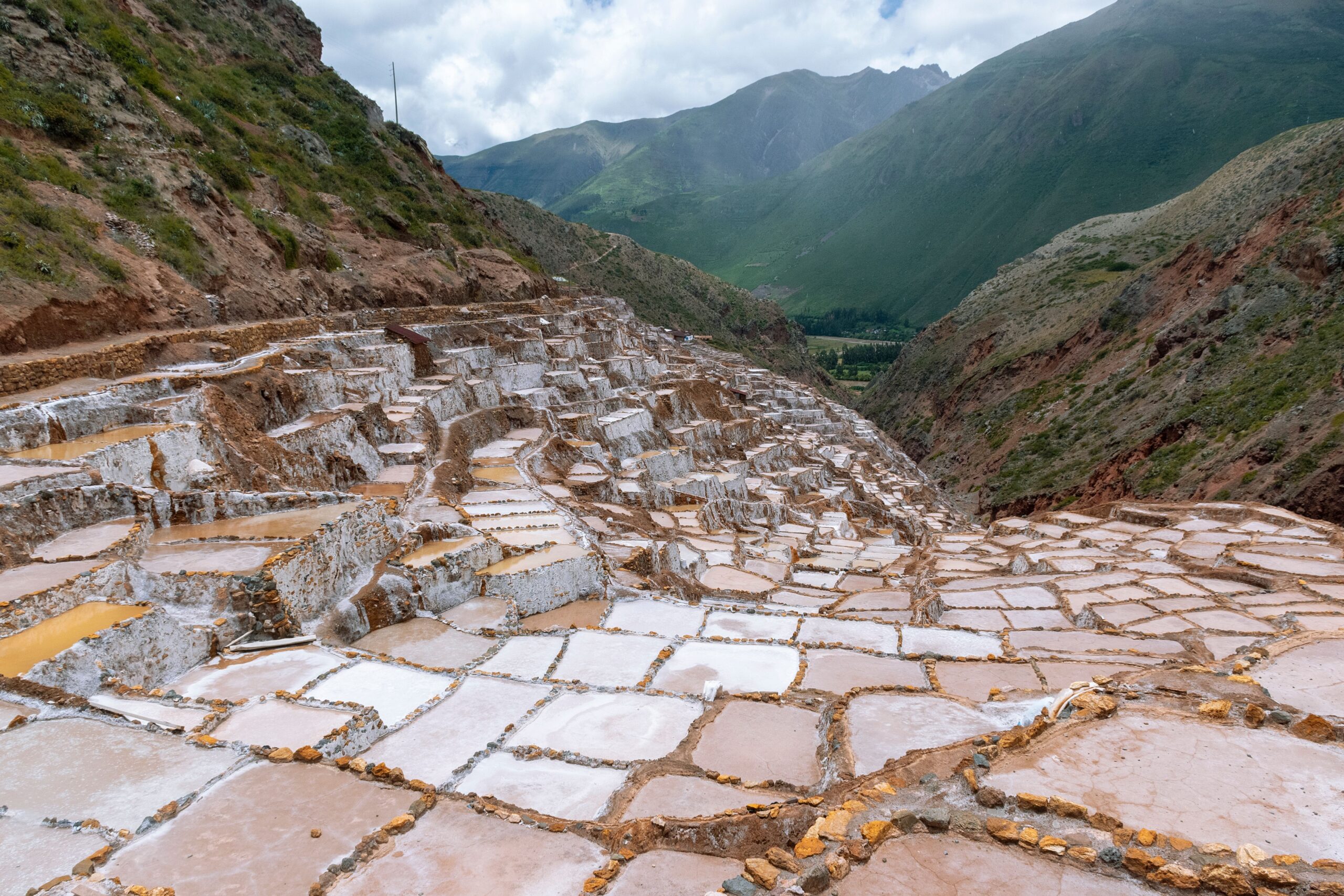
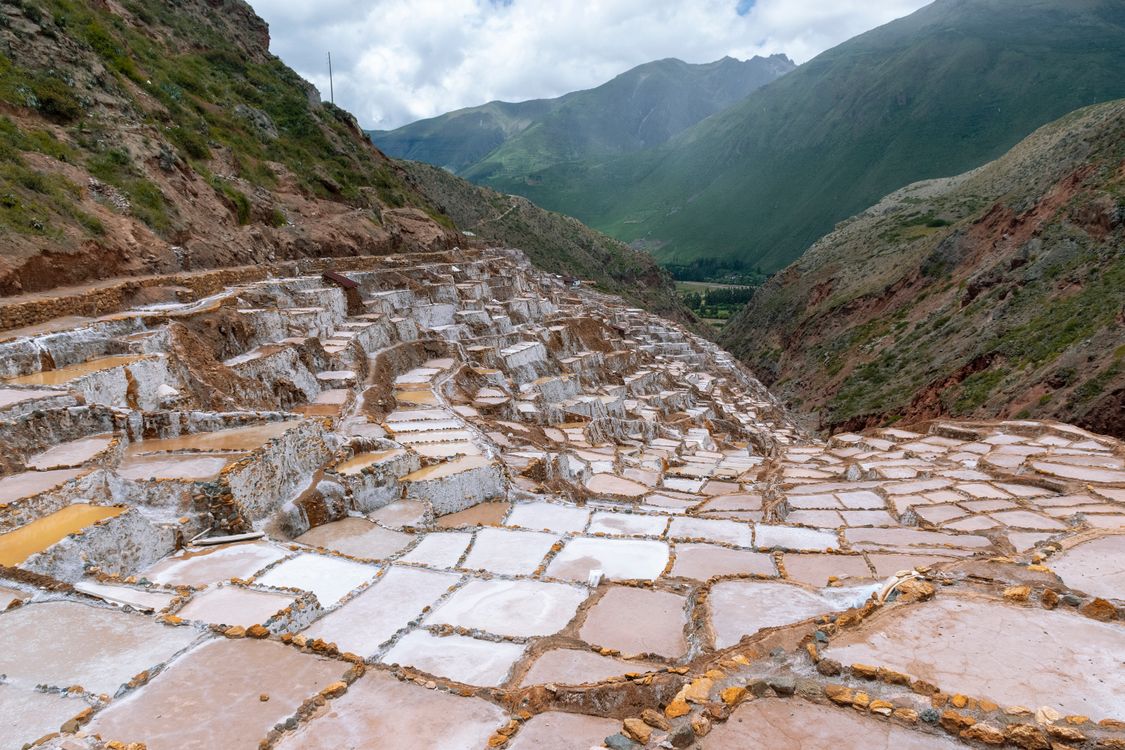
Aerial view of the white terraced salt pans of Maras cascading down the Sacred Valley hillside in Peru

What Are the Maras Salt Mines?

The Maras salt mines are an active salt-harvesting site made up of roughly 4,500 salt wells arranged as stepped terraces on a Sacred Valley hillside (UNESCO World Heritage Centre). A natural spring feeds salty water into hand-built channels, which fill the shallow ponds. As the water evaporates in the mountain sun, salt crystallizes and is scraped out by hand.

The site is also known by its Spanish name, the salineras de Maras. It has been recognized as part of Peru's cultural heritage and has stood on UNESCO's tentative list for World Heritage status since 2019.

What makes the place feel alive, rather than a museum, is that the salt is still worked. Families tend individual ponds, flooding and draining them on a rhythm that has barely changed in centuries.

The History: Pre-Incan Origins

The salt pans predate the Inca Empire. Archaeological evidence points to the Wari culture building the original ponds between roughly 500 and 1100 AD, long before the Inca expanded through the valley. The Inca later inherited and extended the system, and the Spanish recorded it after their arrival.

The water source carries its own history. The spring that feeds the ponds is known in Quechua as Qoripujio, often translated as the "golden spring." It emerges from the mountain already hypersaline, so no salt is added. The mineral content comes entirely from ancient deposits the water passes through underground.

Ownership has stayed local. The ponds are divided among community families, each responsible for their own pools. That communal model, rather than a single company or the state, is a large part of why the harvesting method survived intact.

How the Terraced Pools Produce Pink Salt Today

Thousands of terraced pools still produce salt using pure evaporation, with no machinery involved. A worker opens a small channel to flood a pond with spring water, closes it, and lets the sun do the rest over several days. When the water is gone, a crust of salt remains and is raked into mounds to dry further.

The color depends on timing and depth. The first, cleanest crystals are often sold as fine white salt, while later scrapings carry more minerals and take on the characteristic pink and rose tones that Maras is known for.

Salt from Maras reaches kitchens and shops well beyond the valley. At the entrance stalls you can buy the salt directly, along with salt-based soaps and chocolate, and every purchase supports the families working the ponds in front of you.

Geometric pattern of salt evaporation ponds at Salineras de Maras showing traditional Andean salt harvesting

When Is the Best Time to Visit and Photograph the Salineras?

The best time to visit is the dry season, from May to September, when steady sun keeps the ponds bright white and the access road stays firm. In the wet months, from roughly November to March, rain dilutes the ponds, harvesting slows, and the terraces look grayer and muddier.

For photography, aim for mid to late morning. By then the sun has climbed high enough to light the full basin, and the white salt glows against the brown hillside. Midday delivers the strongest contrast, while late afternoon brings warmer, softer light and longer shadows between the pools.

A few practical notes for the shoot:

  • Bring a polarizing filter if you have one, since it cuts glare off the wet ponds.
  • Wear sunglasses and strong sunscreen, as the salt and altitude both amplify the light.
  • Stay on marked paths between the pools, which are working surfaces, not viewpoints.

If you are timing a broader trip around the weather, our guide to the best time to visit the Sacred Valley of the Incas breaks down each season in more detail.

How to Reach Maras from Chinchero and the Sacred Valley

Maras sits off the main road between Chinchero and Urubamba, about an hour from Cusco by car. From Chinchero, the closest Sacred Valley town, it is a short drive of well under an hour. The turnoff is clearly signed, and a paved road leads from the highway toward the town of Maras and on to the salt pans.

You have a few options for getting there:

  • Private driver or tour: The simplest choice. A driver waits while you explore, which matters at a site with limited transport.
  • Taxi from a nearby town: Available from Urubamba or Chinchero, usually arranged for a round trip with waiting time.
  • Collectivo plus walk: Budget travelers take a shared van to the Maras turnoff, then arrange local transport or walk the final stretch.

A gentle reminder about altitude: at 3,200 metres, give yourself a day or two in the region before a long day of walking. Staying nearby helps. Sky Dome Peru's glass-dome suites near Chinchero put you within easy reach of Maras, so you can acclimatize, sleep at altitude, and reach the salt pans in a short morning drive.

Combining Maras with Moray on a Single Day Out

Maras and Moray are close enough to see comfortably in one outing, and most visitors pair them. Moray is a set of concentric agricultural terraces built into natural bowls in the earth, and researchers have noted a meaningful temperature difference between the top and bottom rings. Many believe the Inca used the site to test crops across different growing conditions.

A typical loop from Chinchero runs like this:

  1. Drive to Moray first, while the morning is cool, and walk the rim of the terraces.
  2. Continue the short distance to the town of Maras.
  3. Finish at the salt pans in late morning, when the light is best for photos.
  4. Shop for salt at the entrance stalls before heading back.

The pair rewards an unhurried pace. Both sit at high altitude, and rushing between them leaves you winded with little time to absorb either. A half day is plenty.

Evenings in the valley belong to the sky. After a day at the salt pans, the thin, dry mountain air makes for exceptional stargazing, which our complete guide to stargazing in the Sacred Valley explores in full.

To make the most of Maras, book a driver for the morning, carry small soles for the entrance fee and the salt stalls, and base yourself near Chinchero so the salt pans are a short drive rather than a long haul. From there, Moray, the Sacred Valley, and the night sky are all within easy reach of a single comfortable base.

Frequently asked questions

Are the Maras salt mines worth visiting?

Yes. The site holds roughly 4,500 salt wells arranged in stepped terraces fed by a natural spring (UNESCO World Heritage Centre), and families still harvest salt by hand. The scale and the colors make it one of the Sacred Valley's most photographed stops.

How much does it cost to enter the salineras de Maras?

There is a small cash-only entrance fee collected at the gate, charged in Peruvian soles and typically a few US dollars. Bring small bills, since card payment is not available and change can be limited.

Can you still buy salt at Maras?

Yes. Stalls at the entrance sell pink and white salt harvested on site, along with salt soaps, chocolate with salt, and herb blends. Buying directly supports the local families who work the ponds.

How do you combine Maras and Moray in one day?

Both sites sit near the town of Maras, a short drive apart. Most visitors see Moray's circular terraces first, then finish at the salt pans. The full loop from Chinchero takes a half day at an unhurried pace.

Best Time to Visit the Sacred Valley of the Incas

Key takeaways

  • The dry season runs May through September, with June and July the driest months (2 mm and 4 mm of rainfall) and the clearest skies for mountain views and stargazing.
  • Nights turn cold in the dry season, dropping to around -2°C (28°F) in June and July, so pack warm layers even when days are mild.
  • Crowds peak in July, August, and October near Machu Picchu, while February is the quietest month and the wettest part of the valley.
  • Time your trip around Inti Raymi on June 24 or the Virgen del Carmen festival in Paucartambo from July 15 to 18 for the valley at its most festive.

The best time to visit the Sacred Valley of the Incas is the dry season, from May through September, when rainfall is minimal, skies are clear, and the Andean peaks stand out sharply against deep blue. If you want the quietest experience with good weather, aim for the shoulder months of May and September, just outside the July and August rush.

Timing shapes everything about a trip here: what you see, how much you pay, and whether afternoon clouds hide the mountains. This guide walks through the Sacred Valley weather month by month, the trade-offs between dry and rainy seasons, the clearest nights for stargazing, and the festivals worth building a trip around.

Is the Best Time to Visit the Sacred Valley the Dry or Rainy Season?

The dry season delivers reliable sunshine and the sharpest mountain views, while the rainy season trades some weather certainty for greener scenery, smaller crowds, and lower prices. In the Sacred Valley, June and July are the driest months on record, with only 2 mm and 4 mm of rainfall respectively (Weather2Travel, 2026).

The dry season spans roughly May through September. Days are mild and bright, afternoons stay clear, and the trails are firm underfoot. The catch is the cold. Nighttime temperatures near Cusco fall to around -2°C (28°F) in June and July, so layers matter even when the midday sun feels warm.

The rainy season runs November through March, peaking in January and February. January alone sees about 153 mm of rain and February about 136 mm (Weather2Travel, 2026). Showers tend to arrive in the afternoon rather than lasting all day, and the hills turn a vivid green. Prices drop, tour groups thin out, and the valley feels calmer. The downside is the risk of muddy trails and occasional route closures.

Which season wins? It depends on your priority. Choose the dry season for guaranteed views and stargazing. Choose the rainy season for solitude, lush landscapes, and a lighter budget.

Month-by-Month Weather and Crowd Levels Across the Valley

Weather and crowds move together in the Sacred Valley, so the best months balance clear skies against how many other travelers share them. Visitor numbers near Machu Picchu peaked in October with 162,479 visitors in 2025, closely followed by August at 160,884 and July at 158,522 (Road Genius, 2026).

Here is how the year tends to unfold across the valley:

  • January to March: The heart of the rainy season. Expect green hills, afternoon downpours, and the fewest crowds. February is the quietest month near Machu Picchu, with 79,806 visitors in 2025 (Road Genius, 2026).
  • April: A transition month. Rain eases off, landscapes stay lush, and tourism begins to pick up. A strong value window.
  • May: The dry season opens. Clear skies, moderate crowds, and comfortable days make this one of the best all-round months.
  • June to August: Peak season. Dry, cloudless, and busy. June brings major festivals, July and August bring the largest crowds.
  • September: Still dry and clear, but crowds ease. Another excellent shoulder month.
  • October: Rainfall starts creeping back, yet October saw the highest visitor count of 2025. Book early.
  • November to December: The rainy season returns gradually, with December wetter than November.

If you want dry weather without the summer crush, May and September are your best bets.

When Are the Skies Clearest for Stargazing and Mountain Views?

June through August give you the clearest, driest nights of the year, which makes them the prime window for stargazing and unobstructed views of the snow-capped peaks. With only 2 mm of rain in June, cloud cover is rare and the Andean sky opens up after dark (Weather2Travel, 2026).

The valley has natural advantages for night-sky watching. It sits at high altitude with thin, clean air and very little light pollution once you leave the towns. In the dry-season months, the Milky Way arcs overhead and southern-hemisphere constellations like the Southern Cross come into sharp focus.

A glass dome suite near Chinchero makes the most of these conditions. You can watch the stars from a warm bed while the temperature outside drops below freezing. For a full breakdown of what to look for and when, our guide to stargazing in the Sacred Valley covers the constellations, the best viewing hours, and how altitude affects visibility.

Clear nights also mean clear mornings. Dry-season dawns reward early risers with crisp, haze-free views of the surrounding mountains, ideal for photography before the day warms up.

Which Festivals Are Worth Timing Your Trip Around?

June and July host the valley's most spectacular Andean festivals, blending Incan tradition with Catholic celebration in a way you will not see any other time of year. The timing overlaps neatly with the dry season, so you get both the best weather and the richest cultural calendar.

Inti Raymi, the Festival of the Sun, takes place every June 24 in and around Cusco. It reenacts the Incan winter-solstice ceremony honoring the sun god, drawing thousands of spectators to Sacsayhuamán. If you plan to attend, book accommodation months ahead, because the whole region fills up.

Just a few weeks later, the Virgen del Carmen festival transforms the nearby town of Paucartambo from July 15 to 18. Masked dancers, music, and processions take over the streets in one of Peru's most vibrant religious celebrations. It pairs well with a dry-season valley itinerary.

UNESCO recognizes Cusco and its surroundings as a World Heritage Site, a reflection of the living Incan heritage woven through these festivals (UNESCO World Heritage Centre, 2026). Visiting during a festival puts that heritage front and center.

How Should You Plan a Glamping Stay in Each Season?

Your packing list and daily rhythm should shift with the season, because a dry-season glamping trip and a rainy-season one call for different preparation. The constant across both is altitude: Chinchero sits at 3,762 m (12,342 ft), higher than Cusco itself, so give yourself a day or two to acclimatize before any serious walking (TRExperience Peru, 2026).

For a dry-season stay (May to September), pack for warm days and cold nights. Thermal layers, a good jacket, and a hat make a real difference after sunset. This is the season when a heated glass dome shines, letting you stay cozy while watching stars through the roof. Book early for June through August, since this window sells out fastest.

For a rainy-season stay (November to March), bring a waterproof layer and quick-dry footwear. Plan outdoor activities for the mornings, when skies are usually clearer, and keep afternoons flexible for showers. You will enjoy greener scenery and more space to yourself.

Either season pairs beautifully with daytime experiences. An alpaca hike near Chinchero works well in both seasons if you time it for the morning. Sky Dome Peru's luxury glamping suites in the Sacred Valley are built for the valley's wide temperature swings, so you stay comfortable whether you come in the dry or the wet months.

Making Your Choice

The simplest plan: book May or September for the best mix of clear weather and manageable crowds, June if a festival and prime stargazing top your list, and the November-to-March window if you want quiet, green, and affordable. Once you have picked your season, lock in your glamping dates early, especially around June and the Inti Raymi rush, and build your acclimatization day into the front of the trip so you arrive at the mountains ready to enjoy them.

Frequently asked questions

What is the best month to visit the Sacred Valley?

May and September are the sweet spots. You get dry, clear weather without the heaviest July and August crowds. June is excellent for festivals and stargazing but books out early around Inti Raymi.

Is the rainy season a bad time to visit the Sacred Valley?

No. November through March brings greener landscapes, fewer tourists, and lower prices. January and February are the wettest, with 153 mm and 136 mm of rain, so expect afternoon showers and some trail closures.

How cold does the Sacred Valley get at night?

Dry season nights are cold. Temperatures near Cusco drop to about -2°C (28°F) in June and July. Daytime highs stay mild, but you will want warm layers after sunset.

When are the skies clearest for stargazing in the Sacred Valley?

June through August offer the clearest, driest skies with minimal cloud cover. The valley sits at high altitude with low light pollution, making these months ideal for seeing the Milky Way and the southern constellations.

How high is the Sacred Valley and will altitude be a problem?

The valley floor sits lower than Cusco, which helps acclimatization. Chinchero, though, sits at 3,762 m (12,342 ft), higher than Cusco, so give yourself a day or two to adjust before hiking.

How to Experience an Alpaca Hike Near Chinchero

Key takeaways

  • An alpaca hike near Chinchero is a gentle, herder-guided walk at high altitude, not a strenuous summit climb.
  • Alpacas were domesticated in the Peruvian Andes around 6,000 years ago, and about 96 percent of the world population still lives in Peru and Bolivia (National Geographic).
  • Chinchero sits on a high plateau above Cusco, so acclimatise for a day or two before you walk.
  • Dress in layers, carry water and sun protection, and plan the walk for the clear morning hours.
  • Pairing the hike with a Sacred Valley glamping stay lets you acclimatise slowly and add stargazing after dark.

The alpaca hike Chinchero is known for is a gentle, guided walk through Andean highlands where local herders lead you alongside their animals across pastures and ridgelines. You book through a community or lodge host, acclimatise to the altitude first, dress in layers, and set out in the morning to meet the herd and the people who raise it.

This guide covers what the walk involves, how to meet the herders and learn a little Quechua, what to pack, which routes and viewpoints reward you most, and how to fold the hike into a Sacred Valley glamping stay. The focus is practical. By the end you will know how to plan the day and what to expect on the trail.

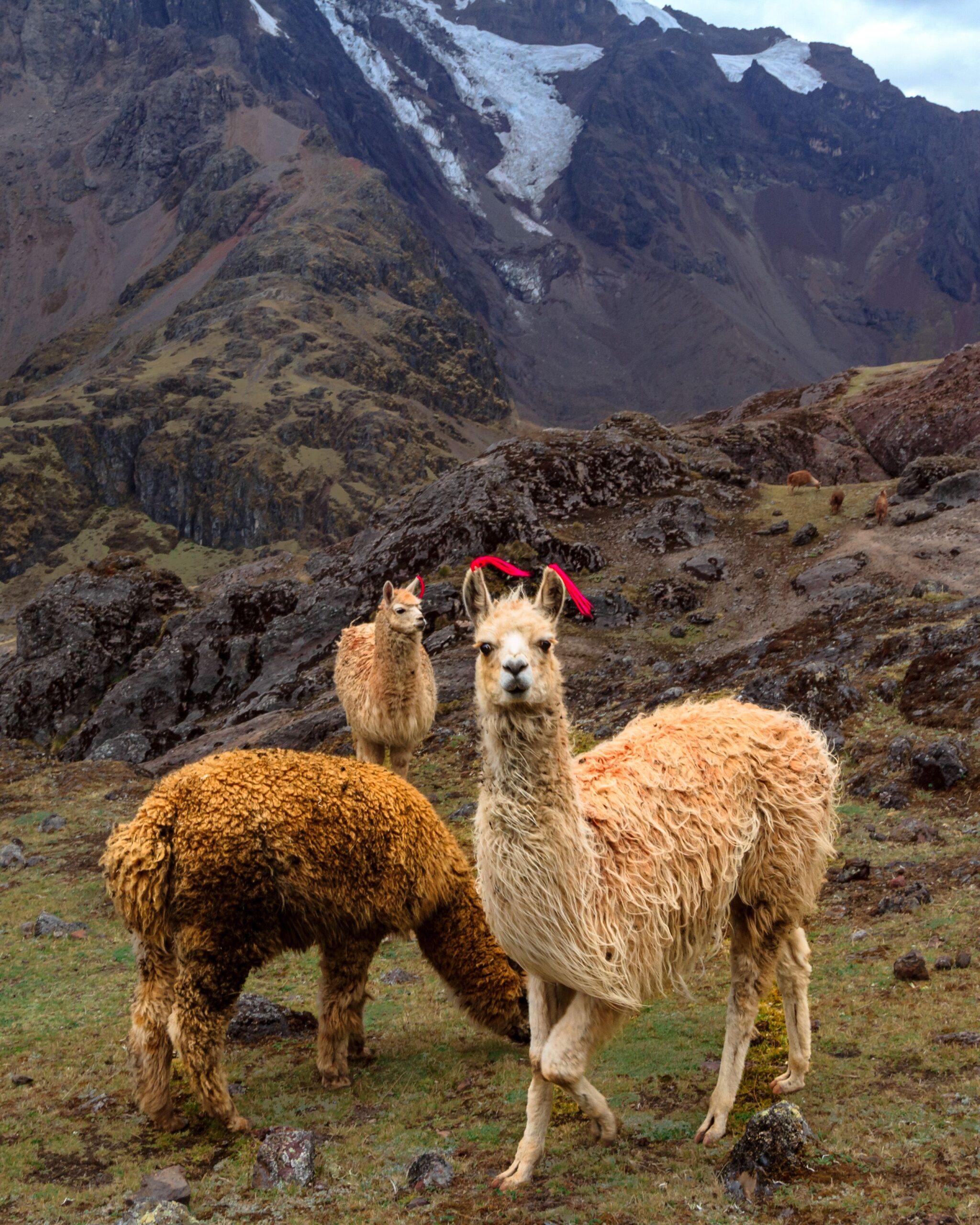
Alpacas grazing in the Andes mountains of Peru

What Does an Alpaca Hike Chinchero Hosts Actually Involve?

An alpaca hike chinchero visitors take is a slow, scenic walk at high elevation, usually one to three hours, led by a herder who sets the pace for both people and animals. Alpacas were domesticated in the Peruvian Andes roughly 6,000 years ago, and about 96 percent of the world's nearly four million alpacas still live in Peru and Bolivia (National Geographic). You walk among a living working tradition that herders still practise every day.

Expect uneven ground, grassy pasture, and a few gradual climbs rather than a steep summit push. The animals graze as they go, so the rhythm is unhurried. That suits the thin mountain air.

The appeal is the setting as much as the animals. You cross open puna grassland with terraced hillsides below and snow-dusted peaks on the horizon. Herders often bring a few animals on a lead so you can walk beside them, feed them, and photograph them against the valley.

Most hikes stay close to Chinchero's farming communities, so the terrain is familiar to your guide. This is andean trekking cusco travelers can manage without technical skills, provided they respect the altitude and keep the pace honest.

Who Are the Herders and What Can You Learn From Them?

The herders are Quechua families whose knowledge of alpacas reaches back thousands of years, long before the Inca. Because alpacas were first domesticated in these highlands thousands of years ago, the skills you see on the trail represent one of the oldest continuous relationships between people and a herd animal anywhere on earth.

On the walk your guide will often explain how a herd is managed through the seasons: where the animals graze, how the young are protected, and how fibre is sheared and sorted by colour. Chinchero is renowned for its living weaving traditions, so many hikes end at a home or workshop where you see raw fleece turned into yarn and cloth.

You can pick up a few words of Quechua as you go. A warm "Allillanchu" works as a greeting, and herders appreciate the effort. Ask before photographing people, offer to help carry something, and buy a woven piece directly if one is offered.

Our observation: Guests who learn even a handful of Quechua greetings before the walk consistently report warmer, longer conversations with herders than those who rely on gestures alone.

These moments are the heart of the day. The alpacas draw you up the hill, but the people and their craft are what you remember.

What Should You Wear and Bring for High Altitude?

Dress in removable layers and plan around the altitude, because Chinchero sits on a high plateau above Cusco, itself one of the highest cities many travelers will ever visit. Mornings start cold, the midday sun is intense, and conditions can swing within an hour, so flexible clothing matters more than any single warm jacket.

Build your kit from the skin out:

  • Base layer: a breathable long-sleeve top to manage sweat.
  • Mid-layer: a fleece or light down for the cold start.
  • Shell: a windproof, water-resistant jacket for sudden gusts or showers.
  • Sun protection: a wide-brim hat, strong sunscreen, and sunglasses. UV is fierce at this elevation.
  • Footwear: broken-in trail shoes or light boots with grip.
  • Water and snacks: carry more water than you think you need.

Pack coca tea or sweets if your host offers them, a common local aid for altitude. Walk slowly on your first day and give your body a day or two to adjust before any longer outing. If you feel a persistent headache, nausea, or breathlessness at rest, stop climbing and descend.

Keep your daypack light. At altitude every extra kilo counts, and the herders set a pace that rewards travelers who move steadily rather than fast.

Where Are the Best Routes and Viewpoints Around Chinchero?

The best routes blend open pasture with a high viewpoint over the Sacred Valley, and the single most famous is the downhill trail from Chinchero toward the Urquillos valley. Chinchero's position on the plateau above the valley gives you long sightlines across terraces, lakes, and distant peaks, which is why it is prized for both hiking and stargazing after dark.

A few reliable options:

  • Chinchero to Urquillos: a classic descent through old Inca terracing and farmland, ending in a greener valley. Good for a half day.
  • Ridge walks above the village: shorter loops that reward you with wide views of Laguna Piuray and the snow line.
  • Community pasture circuits: gentle out-and-back routes on herding land, ideal when you want alpaca time over distance.

Timing shapes the experience. Go in the morning for the clearest air and softest light, and keep an eye on afternoon clouds that roll in during the wetter months. The high plateau that makes these routes so open by day also makes the nights exceptionally dark. For planning the after-hours half of your trip, our complete guide to stargazing in the Sacred Valley covers when and where the sky is clearest.

Carry layers even on a short loop. Weather on the plateau turns quickly, and a clear ridge can cloud over before you finish the descent.

Andean mountain landscape in Peru's Sacred Valley region near Cusco

How Do You Combine an Alpaca Hike With a Glamping Stay?

The simplest way to do the hike well is to base yourself near Chinchero and spread the day across a morning walk, an afternoon rest, and a clear night under the stars. Staying close means you acclimatise gradually instead of commuting from Cusco each morning, and the altitude is easier to manage when you sleep, eat, and walk in the same highland setting.

A glamping stay fits this rhythm naturally. You walk with the herders while the light is good, return to rest during the intense midday sun, and then enjoy the dark Sacred Valley sky after dinner. Sky Dome Peru's glass dome suites near Chinchero are built for exactly this pairing: a comfortable high-altitude base with open views of the surrounding peaks and night sky.

Plan it as a two- or three-night trip. Arrive, take your first day gently to adjust, hike on the second morning, and keep the afternoons flexible for weaving visits or a short ridge walk. To see how the stay itself works, read about the Sacred Valley luxury glamping suite and how it anchors an Andean trip.

Booking the hike through your lodge host also keeps your money with the community that raises the animals. That is the version of the trip most travelers find worth doing.

The next step is practical: block two or three nights near Chinchero, give your first day to acclimatising, and arrange a herder-led morning walk through your lodge. Do that, and the alpacas, the views, and the people fall into place around a single easy base.

Frequently asked questions

Is an alpaca hike near Chinchero suitable for beginners?

Yes. Most routes are gentle valley and ridge walks on gradual terrain, led by local herders. The main challenge is altitude, not distance, so a slow pace and a day of acclimatisation make it accessible to most fit travelers.

How high is Chinchero and will I get altitude sickness?

Chinchero sits on a high Andean plateau above Cusco, itself one of the highest cities most travelers visit. Altitude illness is a real risk at this elevation, so acclimatise for a day or two, hydrate, and walk slowly on your first outings.

What should I wear for a high-altitude alpaca hike?

Wear layers you can add or remove: a base layer, a warm mid-layer, and a windproof shell. Add a sun hat, strong sunscreen, sturdy shoes, and gloves for cool mornings. Weather in the highlands shifts quickly.

Can I combine an alpaca hike with a glamping stay in the Sacred Valley?

Yes, and it is a smart way to acclimatise. Staying near Chinchero lets you walk in the clear morning, rest in the afternoon, and watch the night sky after dark, all without a long daily commute from Cusco.

Stargazing in the Sacred Valley: A Complete Guide

Key takeaways

  • The Sacred Valley near Chinchero sits around 3,762 meters (12,343 feet) above sea level, which thins the atmosphere and sharpens the night sky.
  • The dry season, May through September, brings the clearest nights, and July often sees fewer than one rainy day.
  • Crux, the Southern Cross, is the smallest of the 88 recognized constellations and points the way to true south.
  • Incan astronomers read dark patches in the Milky Way as animals, including a celestial llama whose eyes are Alpha and Beta Centauri.
  • For the Milky Way core, aim for the dry winter months and the nights closest to a new moon.

Stargazing in the Sacred Valley rewards you with some of the clearest, darkest skies in the Southern Hemisphere, thanks to thin high-altitude air and little light pollution near Chinchero. To make the most of it, come in the dry season, time your nights around a new moon, and learn a few southern constellations before you go.

This guide walks through why the high Andes shine so brightly after dark, when to visit, what to look for overhead, how the Inca read the same sky, and how to settle in for a comfortable night of watching the stars.

Why the High Andes Near Chinchero Have Such Clear Night Skies

Altitude is the quiet advantage behind the Sacred Valley night sky. Chinchero sits at roughly 3,762 meters (12,343 feet) above sea level, higher than Cusco itself. At that height you are already above a large share of the atmosphere, so there is less air, dust, and moisture to scatter and blur starlight before it reaches your eyes.

Three things stack up in your favor here. The thin air steadies the view and dims fewer faint stars. The rural setting around Chinchero keeps artificial light low. And the dry-season weather clears away clouds for nights at a time.

Darkness quality matters as much as altitude. Astronomers describe sky darkness with the Bortle scale, where a low number means a truly dark site and a high number means a glowing urban sky. The farther you get from Cusco's lights, the lower your effective Bortle reading, and the more the Milky Way stands out. A glamping base away from town, such as the glass dome suites at Sky Dome Peru, puts you in that darker zone without a long drive after sunset.

Best Seasons and Moon Phases for Stargazing in Cusco's Sacred Valley

For the clearest Sacred Valley night sky, visit in the dry season and go out close to a new moon. The dry season runs from May through September, when rain is rare and skies stay open for hours. July is often the driest stretch of all, with very few wet days across the month.

The wet season, roughly November through March, brings afternoon clouds and frequent rain that can close the sky for nights on end. You can still get lucky with a clear window, but the odds drop sharply.

Moon phase is the second lever, and it is just as important as weather. A full moon is beautiful, yet it floods the sky with light and hides the faint stars and the Milky Way. Aim for the five or six nights around a new moon, when the sky goes genuinely black and the galaxy comes forward. Check a moon calendar before you book, then pair a new moon with the dry season for the best possible odds.

Southern Hemisphere Highlights: The Southern Cross and the Milky Way Core

The southern sky offers sights that northern travelers rarely see, and the Southern Cross leads the list. Crux, the Southern Cross, is the smallest of all 88 constellations officially recognized by the International Astronomical Union (EarthSky, 2026). Despite its size, it is one of the most useful shapes in the sky.

You can use the cross to find your direction. To locate the south celestial pole, extend the long axis of the cross from its head through its foot about four times its own length (EarthSky, 2026). Drop straight down from that point to the horizon and you are looking due south. The Inca, and later Andean travelers, read the sky for direction long before compasses arrived.

The other great southern prize is the Milky Way core, the bright, dense center of our galaxy. From the Southern Hemisphere the core climbs high overhead during the dry winter months, so the valley's best stargazing season lines up neatly with the galaxy's best season. On a moonless night the band of light stretches from horizon to horizon, thick with stars and shadowy dust lanes.

How Incan Astronomy Read the Sky and the Dark Cloud Constellations

Incan astronomy flipped the usual approach to the night sky. Instead of only connecting bright stars into pictures, Andean skywatchers also read the dark patches within the Milky Way, the clouds of cosmic dust that block the light behind them. They saw these shadows as living animals moving along a great celestial river.

They called the Milky Way Mayu, meaning river, and viewed it as a sky-bound mirror of the Urubamba River flowing through the valley below. Within that river they traced a llama, a baby llama, a serpent, a toad, a tinamou, and a fox. The llama, known as Yacana, is the most famous of these dark cloud figures, and its eyes are marked by the bright stars Alpha and Beta Centauri (Futurism, 2026).

This way of seeing turned the sky into a seasonal almanac. The movements of the dark animals tracked the rains, the planting, and the herding year. Standing under that same sky today in the Sacred Valley, you can pick out the dark lanes the Inca watched and understand why the heavens sat at the center of their world.

For travelers who want the Andean heritage alongside the astronomy, the region pairs stargazing with daytime visits to Incan sites, textile villages, and alpaca trails. A luxury base in the valley makes it easy to spend the day exploring and the night looking up, as described in this guide to a Sacred Valley luxury glamping suite.

Tips for Watching the Stars From a Glass Dome Suite

A glass dome suite lets you stargaze from a warm bed, which solves the biggest problem of high-altitude nights: the cold. At nearly 3,800 meters, temperatures drop fast after dark, and a transparent dome keeps you comfortable while the sky stays in full view above you. Sky Dome Peru built its suites around exactly this experience, with clear ceilings angled at the Andean sky.

A few practical tips make the night better:

  • Acclimatize first. Give yourself a day or two at altitude before a late night, drink plenty of water, and go easy on alcohol.
  • Kill the indoor lights. Even a dome's soft lamps can wash out faint stars, so dim everything and let your eyes adjust for 20 to 30 minutes.
  • Protect your night vision. Use a red-light flashlight or your phone's red screen mode instead of white light.
  • Dress for the step outside. If you walk onto a deck, wear warm layers, a hat, and gloves against the thin, cold air.
  • Bring simple tools. Binoculars reveal star clusters beautifully, and a star-map app in night mode helps you name what you see.
  • Watch the moon calendar. Book your clearest, darkest stretch around a new moon in the dry season.

From a dome, the sky becomes part of the room. You can track the Southern Cross wheeling overhead, trace the Milky Way's dark llama, and fall asleep under the same stars the Inca charted centuries ago.

Your Next Clear Night

The simplest way to guarantee a great night under the Andean sky is to plan around three things: the dry season, a new moon, and a dark location away from Cusco's glow. Line those up, learn to spot the Southern Cross before you arrive, and the Sacred Valley will do the rest. Pick your dates around the next new moon between May and September, then choose a stay with a clear view of the sky so you can watch it without ever leaving your bed.

Frequently asked questions

When is the best time for stargazing in the Sacred Valley?

The dry season from May to September offers the clearest skies. Plan your visit within a few days of a new moon to see the faintest stars and the Milky Way core without moonlight washing them out.

Can you see the Milky Way from Cusco's Sacred Valley?

Yes. The Milky Way core is visible across the Southern Hemisphere from roughly February to October, with June and July giving the richest overhead views on clear, dark nights away from town lights.

What can I see in the southern sky that I cannot see from Europe or North America?

The Southern Cross, the Magellanic Clouds, and the bright center of our galaxy. Northern travelers also get a fresh view of the Milky Way's dark cloud shapes that Incan astronomers mapped as animals.

Is the high altitude a problem for stargazing?

The altitude actually helps, because there is less atmosphere to blur the stars. Give yourself a day or two to acclimatize, dress in warm layers, and stay hydrated before a late night under the sky.

Sacred Valley Luxury Glamping Suite: Your Andean Escape

Key takeaways

  • A true Sacred Valley luxury glamping suite combines a private climate-controlled dome, a real bed and bathroom, and uninterrupted mountain or sky views.
  • The global glamping market was valued at USD 3.8 billion in 2025 and is projected to reach USD 7.9 billion by 2033 (Grand View Research).
  • Sky Dome Peru's glass domes near Chinchero sit above the valley floor, pairing warm interiors with open views of the Andean night sky.
  • The best stays bundle experiences: stargazing, alpaca hikes, and guided heritage tours of nearby Inca sites.
  • Plan two to three nights so your body adjusts to the altitude and you have time for both rest and excursions.

A Sacred Valley luxury glamping suite gives you a private glass dome with a real bed, a heated en-suite bathroom, and open views of the Andes, without putting a canvas wall between you and the mountains. It is the stay for travelers who want the comfort of a good hotel and the intimacy of sleeping under the stars at the same time.

Demand for this kind of stay is not a passing trend. The global glamping market was valued at USD 3.8 billion in 2025 and is projected to reach USD 7.9 billion by 2033, growing at a compound annual rate of 9.5% (Grand View Research, 2026). Peru's Sacred Valley, with its Inca heritage and high clear skies, has become one of the destinations driving that growth. Below is what separates a real luxury dome suite from a dressed-up tent, what you can expect inside Sky Dome Peru's suites near Chinchero, and how to plan your trip.

What Defines a True Sacred Valley Luxury Glamping Suite?

A true Sacred Valley luxury glamping suite is a permanent, insulated structure with hotel-grade amenities and a direct line of sight to the landscape. The dome is the headline, but the comfort inside is what earns the "luxury" label.

Three things set a genuine luxury suite apart from a basic glamping tent:

  • A solid, weatherproof shell that holds heat at high altitude, not a fabric tent that sags in the wind.
  • A private en-suite bathroom with reliable hot water, rather than a shared block down a muddy path.
  • Thoughtful interiors: a proper mattress, quality linens, heating, and framed views that make the mountains part of the room.

The strong growth in the glamping market has pushed providers to compete on exactly these details. Travelers now expect the bed, bathroom, and climate control of a boutique hotel, plus the open sky a hotel room can never offer. When a suite delivers both, it stops being a novelty and becomes a reason to choose the destination.

Inside Sky Dome Peru's Glass Dome Suites Near Chinchero

Sky Dome Peru's suites are geodesic glass domes set in the highlands near Chinchero, positioned so the main living area faces the valley and the open sky. The transparent panels are the point: you can lie in bed and watch the weather move across the Andes by day and the stars appear at night.

Starry night sky with the Milky Way arching over dark Andean hills

Each suite is built for comfort at elevation. Chinchero sits higher than Cusco city, where nights turn cold even in the dry season, so the domes are heated and furnished to keep you warm while the glass keeps the view. Inside you get a real bed, an en-suite bathroom, and a private deck or seating area for taking in the surroundings. The design keeps hotel-style comfort without cutting you off from the mountains, which is the whole reason to come.

The location matters as much as the structure. Chinchero is a working Andean town known for its weaving tradition and its Sunday market, and it sits on the road between Cusco and the heart of the Sacred Valley. That puts Inca ruins, local markets, and the route toward Machu Picchu within easy reach of your door.

How Glamping Blends Five-Star Comfort With Raw Andean Nature

Glamping works because it removes the usual trade-off between comfort and nature. You do not have to choose between a warm bed and a wild setting; a well-built dome suite gives you both at once.

A conventional hotel seals you inside four walls, and traditional camping leaves you exposed to the cold and the hard ground. A luxury dome sits in the middle in the best way. The insulated shell and heating handle the high-altitude chill, while the glass roof and walls keep you inside the landscape rather than hiding it. You fall asleep watching the sky and wake up to the mountains.

This balance is a large part of why the category keeps expanding. As the market climbs toward a projected USD 7.9 billion by 2033 (Grand View Research, 2026), the stays pulling travelers in are the ones that pair real comfort with a setting worth waking up to. In the Sacred Valley, that setting is an ancient highland shaped by the Inca, which is hard to match anywhere else.

What Experiences Come Bundled With Your Stay?

The strongest Sacred Valley dome stays bundle experiences alongside the room, so your trip is about the region and not just the suite. At Sky Dome Peru, the stay is built around three things the location does well: stargazing, time with Andean animals, and heritage tours.

Machu Picchu citadel set among the misty peaks of the Peruvian Andes

Stargazing is the signature. The Sacred Valley's altitude and distance from big-city light give you dark, clear skies on most dry-season nights, and the transparent dome turns your bed into a viewing platform. Much of the world now lives under skies too bright to show the Milky Way, so a night where the stars fill the dome is something many guests have never actually seen.

Beyond the stars, a typical stay can include:

  • Alpaca and llama hikes through the highlands, where you walk alongside the animals that have grazed these valleys for centuries.
  • Guided heritage tours to nearby Inca sites and the terraces and ruins scattered across the region.
  • Visits to Chinchero's market and weaving cooperatives, where local families still work by hand.

Bundling these turns a comfortable room into a full Andean itinerary, which is what most international travelers are really booking.

Why Choose a Dome Suite Over a Conventional Sacred Valley Hotel?

Travelers choose a dome suite over a conventional hotel because it offers an experience the hotel physically cannot: sleeping inside the landscape instead of looking at it through a window. The comfort is comparable, but the memory is not.

A standard Sacred Valley hotel gives you a clean room, a restaurant, and a view if you booked the right floor. A glass dome gives you privacy, an unobstructed sky, and a sense of being out in the highlands while staying warm and well-fed. For a honeymoon, a milestone trip, or a first visit to Peru, that difference is often the entire reason for the journey.

There is also the matter of scarcity. Hotel rooms are abundant across Cusco and the valley, while well-designed dome suites are limited in number and tend to book out in the dry season. Choosing one is less about finding a bed and more about securing a specific, hard-to-repeat night under the Andean sky. For many guests, that exclusivity is worth planning the trip around.

How to Book Your Suite and Plan the Ideal Length of Stay

To book well, reserve early for the dry season and plan two to three nights so you can enjoy the suite without rushing. The dry months from roughly May to September bring the clearest nights for stargazing and the steadiest weather for hikes, and they are also when demand peaks.

A simple plan works best:

  1. Book directly through Sky Dome Peru and confirm which experiences, such as stargazing, alpaca hikes, or heritage tours, are included or available as add-ons.
  2. Give yourself a buffer day in Cusco or the valley before any high-altitude activity. Chinchero sits at serious elevation, and arriving straight from sea level can leave you short of breath.
  3. Keep your first evening gentle. Rest, hydrate, eat lightly, and save the big excursion for day two once your body has adjusted.

On length of stay, one night is enough to see the dome but too short to settle in or to guarantee a clear sky. Two to three nights is the sweet spot: one evening for stargazing, one day for a guided tour or alpaca hike, and enough slow time to actually rest. If the Sacred Valley is part of a longer Peru route, a dome stay near Chinchero also makes a natural, scenic base before continuing toward Machu Picchu.

Your next step is practical: pick your dates in the dry season, check availability early, and build the trip around the nights you want under the stars. The suite is the easy part. The sky does the rest.

Frequently asked questions

What makes a glamping suite count as luxury rather than a fancy tent?

A luxury suite gives you a solid private structure, a proper bed, an en-suite bathroom with hot water, heating, and curated views. You get hotel-grade comfort without losing direct contact with the landscape.

Where are Sky Dome Peru's suites located?

The glass domes sit in the highlands near Chinchero, in Cusco's Sacred Valley. The location places you within reach of Inca sites, local markets, and transport toward Machu Picchu.

Is the altitude a problem for a dome stay near Chinchero?

Chinchero sits higher than Cusco city, so some visitors feel the thin air on arrival. Resting your first day, drinking water, and avoiding heavy meals helps most people adjust within a day or two.

How many nights should I book?

Two to three nights works well. That gives your body time to adjust to the altitude and leaves room for stargazing one evening and a guided excursion or alpaca hike on another.

Can I see the stars from inside the suite?

Yes. The transparent dome roofs are built for sky viewing, and the rural highland setting away from city lights means clear nights reveal far more stars than most travelers see at home.

Booking Notice