Chinchero Textiles: How Andean Women Preserve Inca Heritage and Build Economic Independence
Chinchero, Peru, is widely recognized for its ancestral textile traditions, colorful weaving, and strong connection to Inca culture. For generations, Andean women have played a fundamental role in preserving this living heritage. In Chinchero, textile weaving is not simply a craft—it is a way of expressing identity, transmitting knowledge, strengthening communities, and creating opportunities for women.
Today, Chinchero textiles continue to connect the past with the present while helping many Andean women generate their own income and strengthen their economic independence.
The Living Textile Tradition of Chinchero
The textile tradition of Chinchero, Cusco, has deep roots in the Andean world and preserves techniques that existed long before the arrival of the Spanish.
During the Inca period, textiles were highly valued. Clothing and woven pieces could communicate social status, identity, community belonging, and cultural meaning. Knowledge about fibers, colors, weaving, and designs was passed from one generation to another.
In Chinchero, many families continue to preserve these traditions. Mothers, grandmothers, and daughters learn the techniques through practice, keeping ancestral knowledge alive while adapting it to contemporary life.
This is why traditional textiles in Chinchero can be understood as a form of living cultural heritage.
How Are Chinchero Textiles Made?
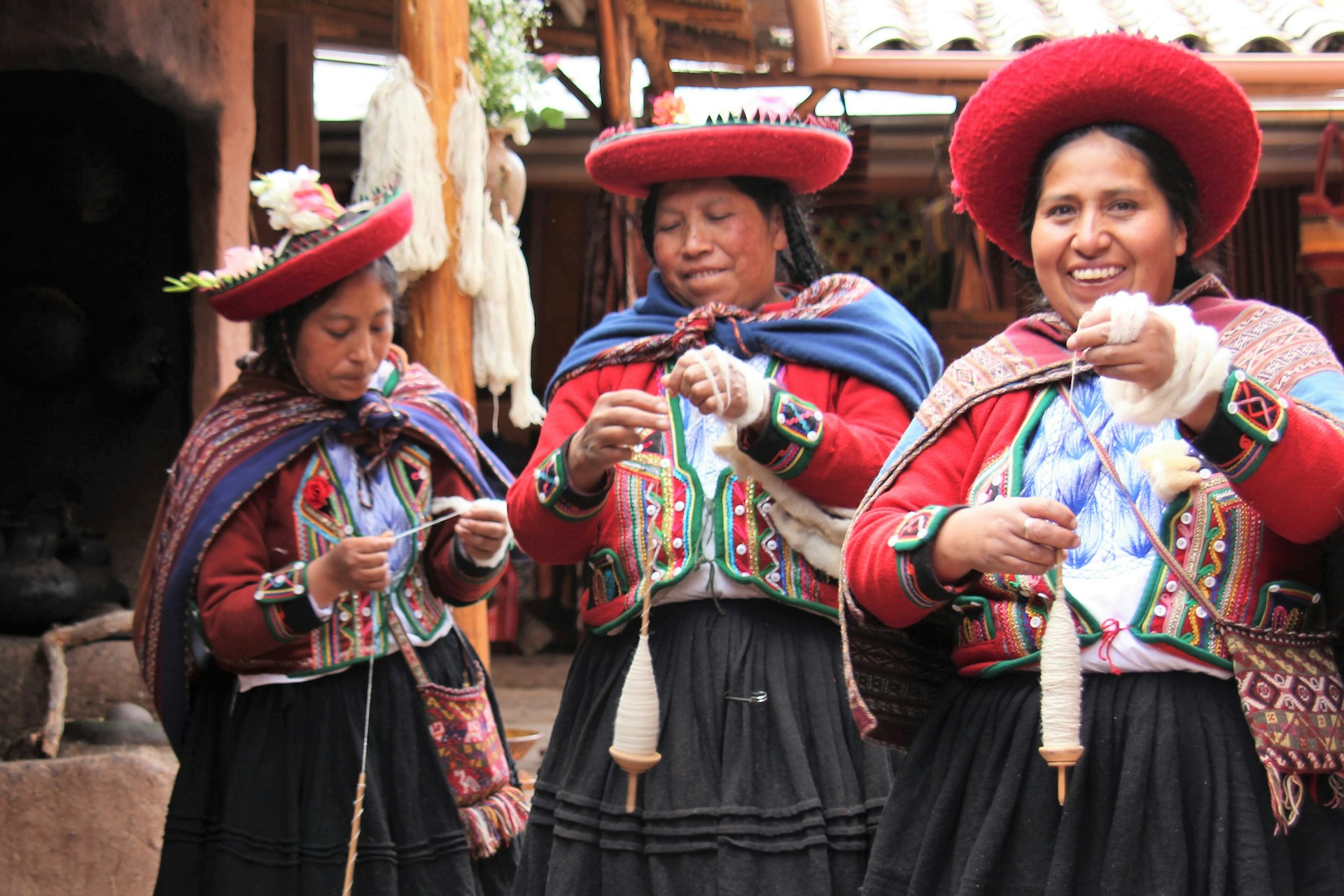
Creating a traditional textile requires patience, knowledge, and considerable skill. The process begins with the preparation of natural fibers, which may come from alpaca, sheep, or other locally used materials.
The fibers are spun into yarn and then dyed. Traditionally, Andean artisans have used natural ingredients to obtain different colors, including plants, flowers, roots, minerals, and other elements found in nature.
After the yarn has been prepared, the weaver uses a traditional loom to create the textile. Each stage requires precision because the final design depends on the combination of colors, threads, patterns, and weaving techniques.
For the women of Chinchero, this process represents much more than producing a beautiful piece of fabric. It is a way of preserving knowledge that has been transmitted across generations.
The Colors of Chinchero Textiles
Color is one of the most recognizable characteristics of Chinchero weaving.
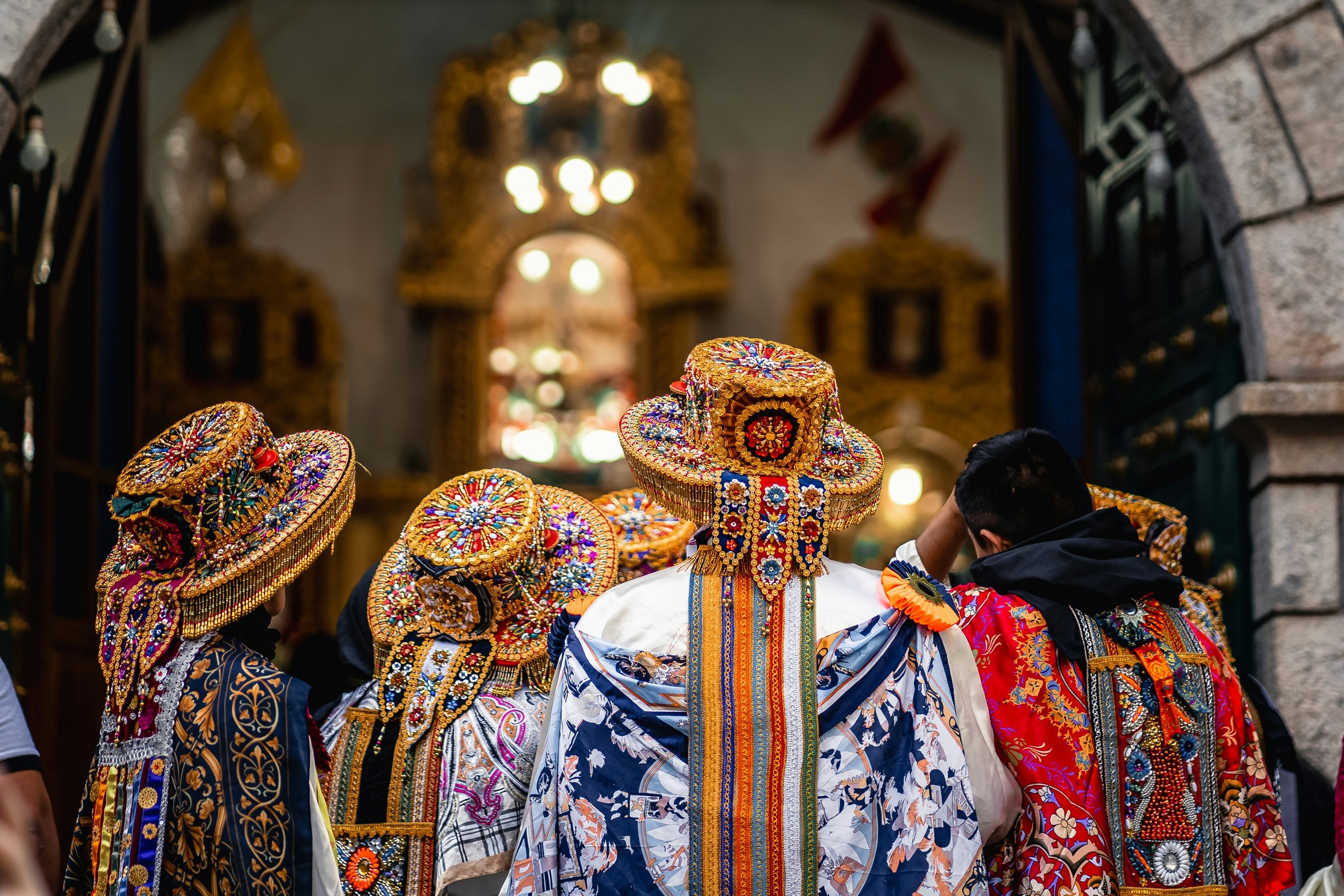
Bright reds, deep blues, greens, yellows, oranges, and other tones are carefully combined to create distinctive patterns. Many traditional artisans continue to use natural dyes, demonstrating their knowledge of local plants and materials.
Colors can have cultural and symbolic associations, and their meaning may vary according to the design, community, and context. Rather than being merely decorative, the combination of colors contributes to the story and identity expressed through each textile.
Andean Figures, Symbols and Stories
The figures woven into Chinchero textiles are an important part of Andean visual culture.
Geometric shapes, plants, animals, agricultural elements, mountains, stars, and other motifs can appear in traditional designs. These elements may represent aspects of nature, agriculture, spirituality, community life, or the relationship between people and their environment.
A textile can therefore be understood as a visual language. Through patterns and symbols, Andean women preserve memories, traditions, and a connection with their ancestors.
Every piece can tell a story.
Women as the Guardians of Textile Knowledge
Andean women have an essential role in the preservation of Chinchero’s textile tradition.
For generations, weaving and textile knowledge have been passed from mothers and grandmothers to younger generations. Through this process, women have become important guardians of cultural memory.
However, textiles also have another powerful dimension: they can provide women with an opportunity to generate their own income.
Textiles and Women’s Economic Independence
For many women in Chinchero, textile production is an important source of economic opportunity.
Selling handmade textiles allows women to earn money through their own knowledge and skills. This income can contribute to household expenses, education, children’s needs, community activities, and personal goals.
More importantly, having their own income can strengthen women’s ability to make decisions about their lives.
Economic independence can give Andean women greater autonomy—the ability to decide what is best for themselves, invest in their future, and participate more actively in decisions within their families and communities.
In this sense, textile weaving is not only an ancestral tradition. It can also be a tool for empowerment.
Challenging Machismo Through Economic Independence
Machismo and gender inequality have affected women in many societies, including rural communities in the Andes. It would be inaccurate to suggest that textiles alone eliminate these challenges. However, economic independence can give women greater agency and strengthen their position within their families and communities.
When a woman can generate her own income, her work gains economic recognition. She can have greater control over how she uses her earnings and can make decisions based on her own priorities.
For the women of Chinchero, textile production can therefore represent both cultural preservation and empowerment.
The loom becomes more than a traditional tool. It can become a means of creating opportunities, strengthening confidence, and building a more independent future.
Preserving Culture While Building the Future
One of the most remarkable aspects of Chinchero textiles is the way tradition and modern life coexist.
Andean women are not simply reproducing the past. They are keeping ancestral knowledge alive while finding new ways to share and sell their work. Through tourism, local markets, cultural organizations, and direct sales, their textiles can reach people from Peru and around the world.
This creates an important connection between cultural preservation and sustainable economic opportunity.
Supporting authentic textile production in Chinchero means more than purchasing a handmade souvenir. It can help recognize the knowledge, time, creativity, and labor of the women who create these pieces.
Chinchero: Where Tradition Becomes Empowerment
Chinchero, Cusco, is a place where history continues to live through its people. Its textiles preserve memories of the Andean past while creating opportunities for the present.
The colors, figures, and symbols woven by Andean women carry cultural meaning and connect generations. At the same time, the income generated through textile production can help women strengthen their economic independence and make decisions about their own lives.
The story of Chinchero women and textiles is therefore a story of heritage, identity, resilience, and empowerment.
Every thread connects the past with the future. Every color carries a memory. And every woman who continues to weave helps keep Chinchero’s ancestral culture alive.