

Key takeaways
- The fastest field test is the ears: llamas have long, curved banana-shaped ears while alpacas have short, straight spear-shaped ears.
- Llamas are noticeably larger, standing 102 to 127 cm at the withers versus 76 to 97 cm for alpacas, according to the MSD Veterinary Manual.
- Llamas were bred as pack animals and alpacas were bred for fine fleece, which still shapes how they look and behave today.
- Peru holds about 87 percent of the world's alpaca population, so the Sacred Valley is one of the best places on earth to see them.
- Alpaca fiber comes in roughly 22 natural colors and is prized for being soft, warm and lanolin-free.
Look at the ears first: llamas have long, curved ears shaped like bananas, while alpacas have short, straight ears that point up like little spears. Size settles the rest, because a llama stands a head taller than an alpaca and carries a leaner, longer face, whereas an alpaca looks round, woolly and smaller all over. Those two clues answer the alpaca vs llama question in seconds, and the rest of this guide explains the differences in body, history and fleece so you can spot each animal with confidence on your next trip to the Peruvian Andes.
Both animals belong to the group known as Andean camelids, a family that also includes their wild cousins, the vicuña and the guanaco. If you are planning a stay in Cusco's Sacred Valley, you will almost certainly meet both species, so knowing the difference makes the encounter far more rewarding.
Alpaca vs Llama: Key Physical Differences
The single most reliable field test is the ears. Llama ears are long and curve inward at the tips, a shape people compare to a banana. Alpaca ears are short, straight and spear-like. Once you train your eye on the ears, you rarely confuse the two again.
Size is the next giveaway. According to the MSD Veterinary Manual, llamas stand 102 to 127 cm at the withers and weigh 120 to 200 kg, while alpacas stand just 76 to 97 cm and weigh 60 to 80 kg. The Smithsonian's National Zoo puts the alpaca at roughly 32 to 39 inches at the shoulder and 100 to 200 pounds, which lines up closely with those figures. In practice, a llama can look you almost in the eye, while an alpaca comes up to about your waist or chest.
The face and fleece tell you more. Alpacas have blunt, fluffy faces with fiber growing right up around the cheeks and forehead, giving them that soft teddy-bear look. Llamas have longer, narrower faces that stay cleaner of wool. Alpaca fleece is dense and fine across the whole body, because these animals were bred for it. Llama coats are coarser on the outside, built for weather protection rather than spinning.
Here is a quick reference you can use on the trail:
- Ears: llama long and banana-shaped, alpaca short and straight
- Height at withers: llama 102 to 127 cm, alpaca 76 to 97 cm
- Weight: llama 120 to 200 kg, alpaca 60 to 80 kg
- Face: llama long and lean, alpaca round and woolly
- Fleece: llama coarse outer coat, alpaca fine and uniform
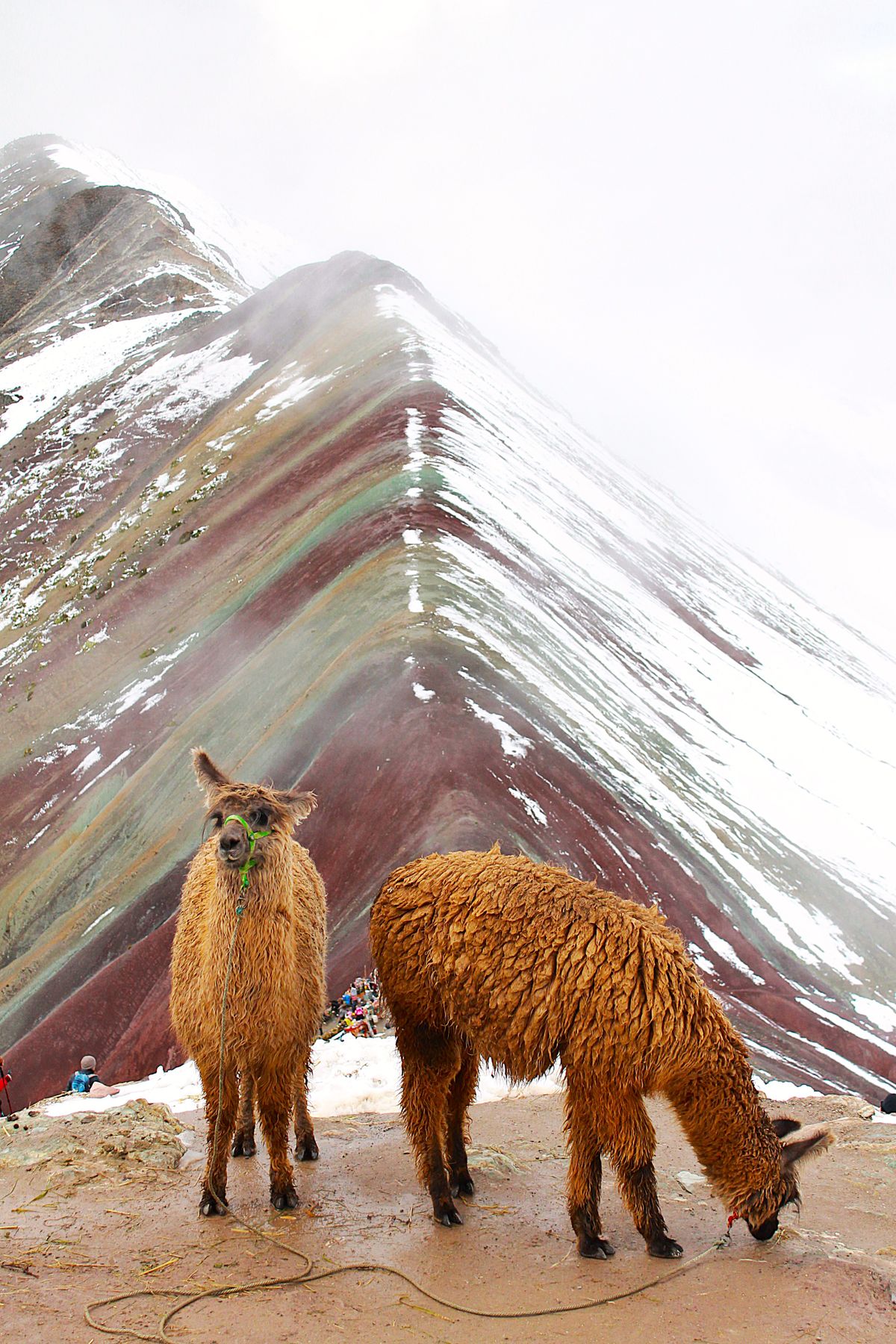
How Each Animal Was Used Across Andean History
The reason they look so different is that Andean peoples bred them for different jobs thousands of years ago. The Smithsonian's National Zoo notes that alpacas were domesticated more than 6,000 years ago, and research from the University of Michigan's Animal Diversity Web traces the alpaca back to the wild vicuña and the llama back to the wild guanaco.
Llamas became the pack animals of the Andes. Strong and sure-footed at high altitude, they carried trade goods, salt, maize and supplies along the mountain roads that tied the Inca empire together. A healthy llama can shoulder a meaningful load across steep terrain where carts and wheels were useless, which made them essential to Andean economies long before any European arrived.
Alpacas took a different path. They were bred almost entirely for their fleece, which was spun into fine cloth reserved for nobility and used in offerings. That selective breeding over millennia is exactly why the modern alpaca is smaller, softer and less interested in hauling cargo than its llama relative. Both species also provided meat, hides and dung for fuel, so they anchored daily life far beyond their most famous roles.
You can still see this living heritage in the weaving communities around Chinchero, where families spin and dye alpaca yarn using methods passed down for generations. Our guide to shopping for authentic Andean textiles in Chinchero walks through how to recognize genuine handwoven pieces.
Where to Meet Alpacas and Llamas in the Sacred Valley
Peru is the heartland of these animals. Animal Diversity Web, published by the University of Michigan Museum of Zoology, reports that Peru holds about 87 percent of the world's alpaca population. That concentration means the Cusco region and the Sacred Valley give you some of the best wild-feeling encounters anywhere.
Herds graze the high pastures above the valley floor, especially on the plateaus near Chinchero, where the open puna grassland suits them. You will also meet both species at textile cooperatives, archaeological sites, and smallholdings along the main valley road. Llamas in particular are a common sight at ruins, where they keep the grass trimmed and pose patiently for photographers.
Sky Dome Peru sits in this landscape near Chinchero, so the camelids are practically neighbors. Guests often spot grazing herds on the surrounding hillsides before heading out to meet them on foot. The Sacred Valley also rewards travelers who come for its wider ecology, and our overview of the birds and wildlife of the Sacred Valley covers what else to watch for while you are here.
Why Alpaca Fiber Is So Prized Worldwide
Alpaca fleece has a reputation that reaches far beyond the Andes, and the reasons are practical. The fiber is fine, soft and warm, and because it carries no lanolin, it tends to be gentle on skin that reacts to sheep's wool. The Smithsonian's National Zoo notes that alpaca fleece occurs in roughly 22 natural colors, which lets weavers create richly varied cloth without any dye at all.
Supply keeps the material special. Each alpaca produces only a modest shearing each year, so fine fleece stays relatively scarce even where the animals are plentiful. The finest grades, often labeled baby alpaca or royal alpaca, come from the softest, lowest-micron fiber, and these command the highest prices in the global textile market.
For travelers, the appeal is simple. A scarf or blanket bought from a Chinchero weaver is warm, light and made from an animal you may have met that same morning. Just be aware that genuine handspun alpaca costs more than the acrylic blends sold to tourists, and the quality difference is immediately obvious once you handle both.
Meeting the Herds on a Guided Andean Hike
The best way to tell alpacas and llamas apart is to stand beside them. A guided Andean hike from the Sacred Valley takes you onto the high pastures where herds graze, and a local guide can point out the ear shapes, size gaps and fleece textures in real time, which fixes the differences in your memory far better than any photo.
These walks usually move at a gentle pace to account for the altitude, with stops to meet the animals and learn how herding families manage them. Because the trails sit above 3,000 meters, give yourself a day or two to adjust first; our guide to beating altitude sickness in Cusco and the valley explains how to acclimatize so the hike stays comfortable.
If you are deciding when to come, aim for the drier months when the trails are firm and the skies are clear for both hiking and the valley's famous stargazing. Book a guided hike with a herding community or through your glamping host, bring layers and a camera, and let your guide show you the ears first. From there, the rest of the alpaca vs llama puzzle falls into place on its own.
Frequently asked questions
What is the easiest way to tell an alpaca from a llama?
Look at the ears and size. Llamas are larger with long, curved banana-shaped ears, while alpacas are smaller with short, straight ears and a fluffier face.
Are alpacas and llamas the same animal?
No. They are separate but related domesticated species within the Andean camelid family. Alpacas descend from the wild vicuña and llamas descend from the wild guanaco.
Can you ride a llama or an alpaca?
Neither is meant for riding. Llamas were bred to carry cargo loads on their backs, not people, and alpacas are too small and were bred for fleece, not work.
Where can I see alpacas and llamas in Peru?
The Cusco region and the Sacred Valley around Chinchero are ideal. You will find herds on highland pastures, at textile communities, and along guided Andean hikes.
Why is alpaca wool so expensive?
Alpaca fiber is fine, warm, hypoallergenic and lanolin-free, and each animal yields only a limited amount per year, which keeps quality high and supply modest.