Key takeaways
- Start with Allillanchu (hello) and Sulpayki (thank you); these two words alone earn warmer welcomes in Andean villages.
- In Chinchero and other Sacred Valley markets, Hayk'aq means how much and Pisillawan asks for a little less.
- The double-l in Quechua sounds like English y, so llama is said YAH-ma, not LLAH-ma.
- Quechua, called Runasimi by its speakers, was the language of the Inca Empire and is still spoken daily across the Sacred Valley.
- Cusco welcomed 428,782 air arrivals in the first quarter of 2024, so a few local words help you stand apart from the crowd.
A few Quechua phrases for travelers go a long way in the Sacred Valley, where the language of the Inca Empire is still spoken in homes and markets today. Learn to say hello (Allillanchu) and thank you (Sulpayki), and you will notice warmer smiles almost immediately. This guide covers greetings, market words, hiking and village phrases, and pronunciation tips written for English speakers.
Quechua, which its speakers call Runasimi, was the lingua franca of the Inca Empire centuries before Spanish arrived. In Sacred Valley villages near Chinchero, it remains a living daily language. You will not need it to buy a bus ticket, but you will feel the difference it makes in a weaving cooperative or on a mountain trail.
Greetings and Polite Basics in Quechua
The fastest way to connect is with a greeting and a thank you. Most travelers get by with English or Spanish, yet switching to Quechua for a single sentence changes the mood of a conversation. Locals rarely expect visitors to try, so even a clumsy attempt lands well.
Here are the essential greetings and polite basics:
- Allillanchu (ah-yee-YAHN-choo): Hello, or How are you?
- Allillanmi (ah-yee-YAHN-mee): I'm fine (the reply)
- Imaynalla (ee-may-NAH-yah): How are you? (casual)
- Sulpayki (sool-PIE-kee): Thank you
- Añay (ah-NYAI): Thank you (another common form)
- Ama hina kaspa (AH-ma HEE-na KAHS-pa): Please
- Tupananchikkama (too-pa-nan-CHEEK-kah-ma): Goodbye, until we meet again
Say Allillanchu with a smile when you enter a shop or greet a guide. Follow any favor or purchase with Sulpayki. These two words are the backbone of polite travel in the region, and they signal that you see the person in front of you as more than a vendor.
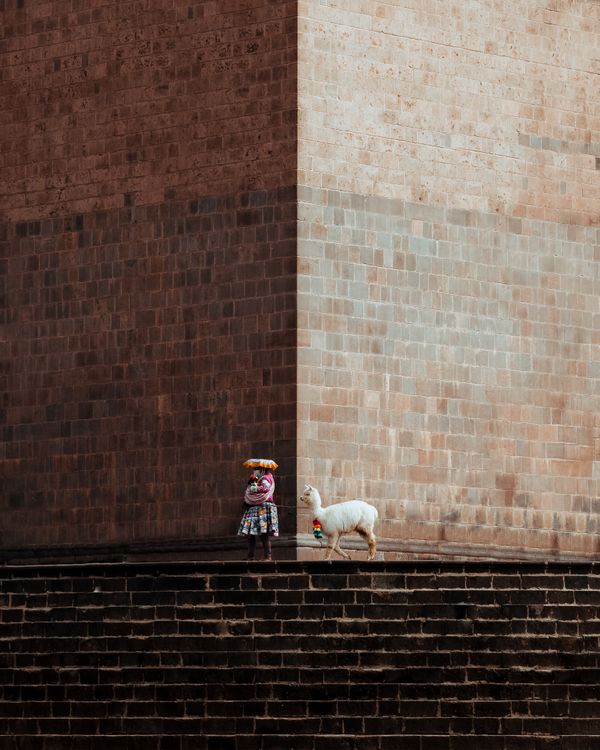
These greetings carry real history. The same language once echoed across the terraces and temples that still define the valley, which is part of why a local greeting feels like an acknowledgment of that past.
Useful Words for Markets and Bargaining
Sacred Valley markets reward a little effort. The weekly Chinchero market and the stalls of Pisac are full of handwoven textiles, and bargaining is expected rather than rude. A few Quechua words show respect for the maker and often warm up the exchange before any price is discussed.
Keep these market words ready:
- Hayk'aq (HY-kahk): How much?
- Anchata (ahn-CHA-ta): Too much, too expensive
- Pisillawan (pee-see-YAH-wan): A little less, please
- Munani (moo-NAH-nee): I want this
- Manan munanichu (MAH-nan moo-NAH-nee-choo): I don't want this
- Allinmi (ah-YEEN-mee): It's good, that works
- Sumaq (SOO-mahk): Beautiful
Bargaining here works best with patience and a smile, not pressure. Ask Hayk'aq, admire the piece with a genuine Sumaq, then suggest Pisillawan if the price feels high. Many weavers in Chinchero still speak Quechua at home, so hearing it from a visitor can turn a transaction into a real conversation. If textiles are your focus, our deeper guide to shopping for authentic Andean textiles in Chinchero explains how to spot handmade quality and fair pricing.
Phrases for Alpaca Hikes and Village Visits
On alpaca hikes and community walks, a different set of words helps. These outings often pass through small ayllus, the extended-family communities that have organized Andean life since Inca times. A respectful word at the right moment matters more here than anywhere else.
Useful trail and village vocabulary:
- Alpaka (ahl-PAH-ka): Alpaca
- Llama (YAH-ma): Llama
- Ayllu (EYE-yoo): Community, extended family
- Pachamama (pah-cha-MAH-ma): Mother Earth
- Sumaq (SOO-mahk): Beautiful
- Ñuqa (NYOH-ka): I, me
- Qam (kahm): You
Pachamama is more than a word on these hikes. Many communities still make small offerings to the earth, and acknowledging her shows you understand the land is treated as sacred. At Sky Dome Peru, our glass dome suites sit within reach of these villages and trails, so an afternoon alpaca walk and an evening under the stars can share the same day.
Pronunciation Tips for English Speakers
Quechua spelling looks tricky, but a handful of rules cover most of it. English speakers stumble on the same few sounds, so fixing those first gives you a big return. Get the double-l and the q right, and your basic Quechua words will be understood.
Keep these pronunciation points in mind:
- Double-l sounds like y. Llama is YAH-ma, and ayllu is EYE-yoo. There is no English l sound here.
- Ñ sounds like ny. As in Spanish, ñuqa is NYOH-ka.
- Q comes from the back of the throat. It sits deeper than an English k, almost like a soft throat clear. A plain k stays normal.
- Stress usually lands on the second-to-last syllable. This holds for most words, which makes guessing easier.
- An apostrophe marks a small pop of air. In Hayk'aq, pause and release a tiny burst after the k.
Do not aim for a perfect accent. Locals are forgiving, and the effort itself is the point. Say each word slowly, lean on the stress rule, and you will be understood far more often than you expect.
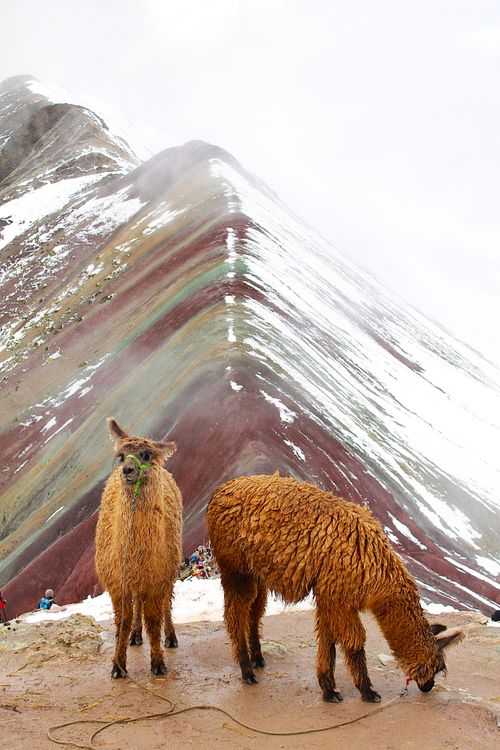
Why a Few Words Open Doors in Andean Communities
A small vocabulary carries real weight because Quechua is tied to identity as much as communication. The Sacred Valley draws large numbers of visitors, and most of them never try a word of the local tongue. Cusco's airport received 428,782 tourist arrivals in the first quarter of 2024, a 76.2% jump over the same period a year earlier (Andina, 2024). Against that volume, a visitor who greets a weaver in her own language stands out at once.
Quechua was the administrative language of the Inca Empire, and for many Andean families it remains the language of the home and the heart. Spanish still dominates business and officialdom across Peru, which makes a traveler's Quechua greeting feel generous rather than expected. That small act often returns something: a longer chat, a fairer price, a story about a textile pattern, sometimes an invitation to linger.
You do not need fluency. You need respect, a willingness to sound imperfect, and a short list of words you actually use. Pair that with curiosity about the culture, and the Sacred Valley opens in ways a guidebook cannot script.
The simplest next step is to pick five phrases from this guide, Allillanchu, Sulpayki, Hayk'aq, Sumaq, and Pisillawan, and practice them out loud before you arrive. Carry them into a Chinchero market or an alpaca trail on your first morning, and you will feel the difference by lunch. To build the rest of your trip around moments like these, start with our perfect 3-day Sacred Valley itinerary.
Frequently asked questions
What are the most useful basic Quechua words for travelers?
Start with Allillanchu (hello), Sulpayki (thank you), Hayk'aq (how much), and Sumaq (beautiful). These four cover greetings, gratitude, shopping, and compliments, which handle most friendly exchanges in Sacred Valley villages.
Is Quechua still spoken in the Sacred Valley?
Yes. In villages like Chinchero, Huilloc, and parts of Ollantaytambo, Quechua remains the everyday language at home and in the market, especially among older residents and weaving cooperatives.
How do you pronounce the double-l in Quechua words?
The double-l sounds like the English y. Llama is said YAH-ma and ayllu (community) is EYE-yoo. This trips up English speakers who expect an l sound.
Do I need to speak Quechua to visit the Sacred Valley?
No. Spanish and English work in most tourist settings. But a handful of Quechua phrases signals respect for Andean culture and often leads to friendlier conversations, better market interactions, and occasional invitations into homes.
What is the difference between Quechua and Runasimi?
They refer to the same language. Runasimi means language of the people and is what many speakers call it themselves. The Sacred Valley variety is Southern or Cusco Quechua.