Key takeaways
- Inca astronomy named constellations from the dark dust lanes of the Milky Way, not just from bright stars.
- The celestial llama Yacana, the fox Atoq and the serpent Mach'acuay are all dark cloud figures.
- The Incas read the Milky Way, called Mayu, as a river that tracked the farming seasons.
- The dry season from April to October gives the Sacred Valley its clearest stargazing nights.
- Alpha and Beta Centauri mark the eyes of the celestial llama near the Southern Cross.
Most ancient skywatchers connected bright stars into pictures. Inca astronomy did the opposite, tracing animals in the dark, dusty rifts that cut through the Milky Way. These shadow shapes, called yana phuyu or dark clouds, gave the Andes a sky full of living creatures: a mother llama, a fox, a serpent and a toad, all drawn from the absence of light rather than its presence.
This way of reading the night still rewards anyone who looks up from the Sacred Valley. The same dark bands the Incas watched 500 years ago arch overhead on clear Andean nights, and knowing what to look for turns a field of stars into a story.
Reading Shapes in the Dark
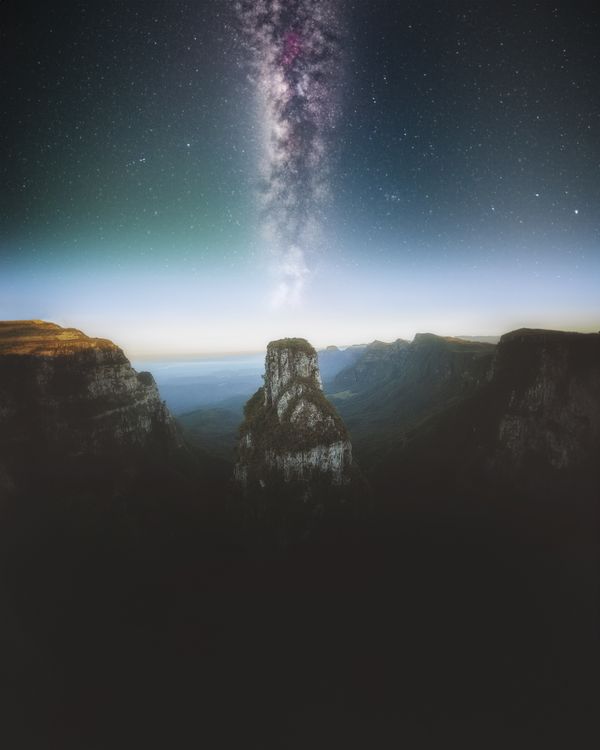
The Milky Way looks different from the high Andes. At roughly 13 degrees south of the equator, its bright central bulge passes almost directly overhead, and the dark lanes of cosmic dust that split the galactic band become bold, obvious features. Where a Northern observer sees mostly a faint smear, an Andean observer sees structure: thick dark channels winding through a river of light.
The Incas built their sky around that contrast. They recognized two kinds of constellations. One kind grouped bright stars into geometric, inanimate figures. The other, more distinctive kind picked out the dark cloud shapes and read them as animals. These animal figures were not decorative. They were tied to weather, water and the farming year, and they stretched across a huge sweep of the galaxy from the region of Scorpius through Centaurus and the Southern Cross.
The anthropologist Gary Urton documented this system in the village of Misminay in the 1970s, finding that farmers there still named the dark clouds and still watched them move. The knowledge had survived centuries of change in the Andes.
The Llama, the Fox and the Serpent
The most important dark figure is the llama, Yacana. She stretches along the Milky Way with a smaller baby llama, Uñallamacha, suckling beneath her. The llama's eyes are the one place the dark and the bright meet: Alpha and Beta Centauri, two brilliant stars beside the Southern Cross, mark where she looks out from the dust.
Yacana carried real meaning for herders. In Andean sky lore the celestial llama descended at midnight during the rainy season to drink from the swollen rivers, keeping the world from flooding. A llama-herding people had placed their own animal at the center of the heavens.
Around her move the other creatures of the dark. Atoq, the fox, trails behind the llama. Mach'acuay, the serpent, winds low along the band of the Milky Way and was associated with the coming of the rains. Hanp'atu, the toad, and Yutu, the tinamou, fill out the menagerie. Yutu corresponds to the Coalsack, the one dark nebula that Western astronomy also names, sitting dark and distinct beside the Southern Cross.
These same southern skies hold the bright patterns travelers already know. If you want to pair the dark figures with familiar star groups, our guide to the southern hemisphere constellations you can see in Cusco is a useful companion to this one.
How Inca Astronomy Kept the Calendar
For the Incas the sky was a working calendar, and the Milky Way itself told the season. They called it Mayu, the river, and treated it as a celestial counterpart to the Vilcanota River flowing through the Sacred Valley. Around the June solstice Mayu stood nearly vertical overhead, a sign of the dry season. Around December it lay closer to horizontal, marking the rains.
The Pleiades carried even sharper timing. The Incas called this tight star cluster Qollqa, the storehouse. It vanishes from the Cusco sky in April and reappears low before dawn in June. That reappearance announced the new agricultural year and helped set the rhythm of planting and harvest. Some accounts hold that the clarity of the cluster at its return was read as a forecast for the coming crop.
That June timing is why the solstice sat at the heart of Inca ceremony. The festival of Inti Raymi, which honored the sun, falls at the same moment the Pleiades climb back into view. The astronomy and the ritual year were the same system. You can see how those dates still shape celebrations today in our overview of Andean festivals and Inti Raymi dates for 2026.
The city of Cusco anchored the whole scheme. From the Qoricancha temple, a web of sacred sightlines known as the ceque system fanned out across the landscape. By one well-documented count, 41 ceque lines connected 328 huacas, or sacred places, radiating from the temple, according to the World History Encyclopedia. Many of those lines carried calendar and horizon meaning, letting priests track the sun, the Pleiades and the turning year against fixed points on the mountains.
Where to Spot Them From the Sacred Valley
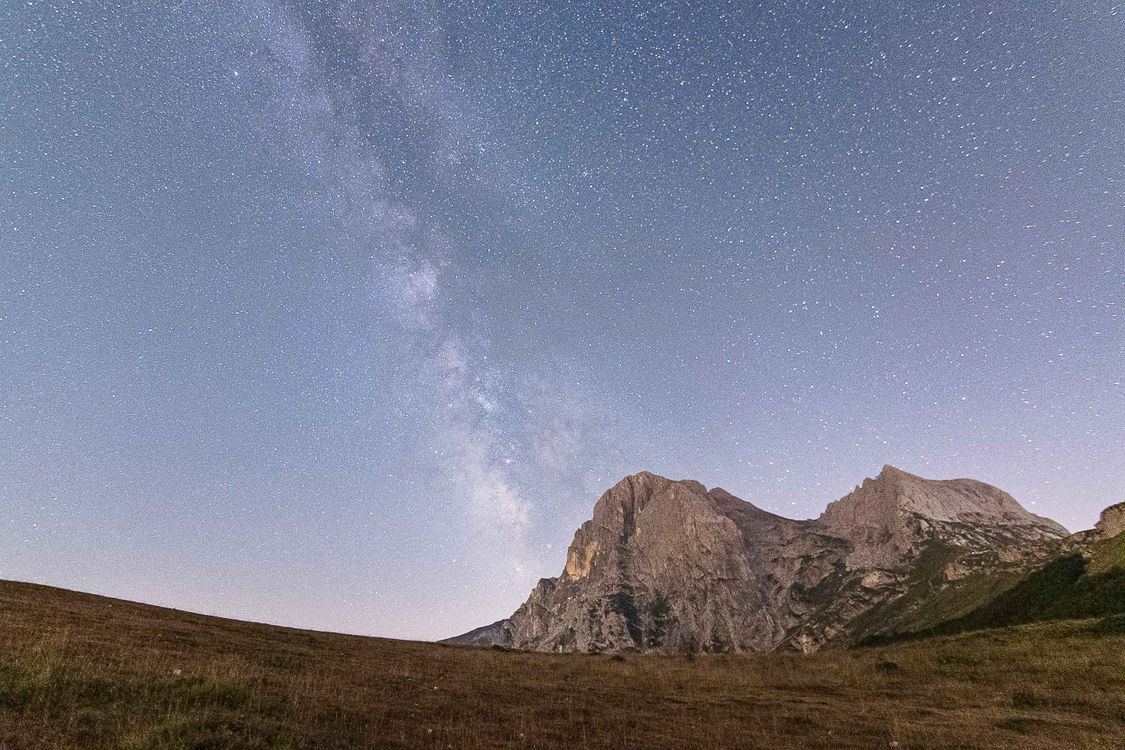
The features the Incas watched are still above the Sacred Valley, and the conditions here remain excellent for seeing them. Cusco sits near 3,400 meters, and much of the valley runs between 2,800 and 3,800 meters. That altitude thins the atmosphere and sharpens the view, and away from town the surrounding countryside offers genuinely dark skies.
Timing matters most. The dry season, roughly April through October, gives the clearest and most reliable nights, with May through September usually the steadiest. During these months the galactic core and its dark lanes ride high overhead after dark, which is exactly when the llama, fox and serpent are easiest to trace.
To find the figures, start with the Southern Cross and the two bright stars of Centaurus beside it. Those stars are the llama's eyes. From there, let your gaze follow the dark channel of the Milky Way rather than the bright stars, and the body of Yacana and the creatures around her begin to emerge. It takes a few minutes of dark adaptation and a sky free of the moon, so plan your nights around the lunar calendar.
At Sky Dome Peru, the glass domes near Chinchero put this sky directly over your bed. On a clear dry-season night you can lie back and watch the same dark river the Incas named, without leaving your suite, then step outside for an unobstructed view across the valley.
Old Knowledge, Modern Eyes
Andean stargazing is now a recognized draw in its own right, and the region has started protecting its skies accordingly. The Sacred Valley has seen community-led astrotourism grow around exactly the sites where this sky knowledge survived, giving visitors a way to learn the dark constellations from people who inherited the tradition.
That continuity is the real appeal. A telescope and a star app can show you the planets, but the dark constellations are best understood the way they were first read: with the naked eye, a dark horizon and someone to point out the shapes. The Incas needed no instruments to build one of the most original sky systems in the ancient world.
If you plan to spend an evening under the Andean sky, give yourself a moonless night in the dry season, find a spot away from town lights, and start with the llama's eyes beside the Southern Cross. Let the dark bands do the rest, and you will be reading the sky much as the Incas did.
Frequently asked questions
What are Andean dark constellations?
They are shapes the Incas saw in the dark, dusty bands of the Milky Way rather than in groups of bright stars. Figures like the llama, fox and serpent were traced from these dark patches.
What did the Incas call the Milky Way?
They called it Mayu, meaning river. They saw it as a celestial river that mirrored the Vilcanota River running through the Sacred Valley below.
When is the best time to see the dark constellations in Cusco?
The dry season from April to October offers the clearest skies, with May through September usually the most reliable. The galactic core rises high overhead at this latitude.
Which stars mark the llama's eyes?
Alpha and Beta Centauri, two bright stars near the Southern Cross, represent the eyes of the celestial llama Yacana. They are among the few bright stars woven into an otherwise dark figure.